
by Mr. Maroa Noa | Nov 18, 2025 | Marketing, Operations, Risk Management
KIPI’s Industrial Property Tribunal recently issued a groundbreaking ruling in a utility model case. This decision could reshape how innovators protect incremental inventions in Kenya.
For many small inventors and businesses, the ruling offers clarity, protection, and a stronger incentive to rely on utility models. In this article, we unpack what this precedent means and how Kenyans can leverage it.
What Is a Utility Model?
A utility model is a form of intellectual property right. In Kenya, it protects technical inventions that improve functionality, manufacturing, or use.
Unlike patents, utility models do not require an inventive step — only novelty and industrial applicability.
They are sometimes called “petty patents” or “mini-patents” because they are cheaper, faster to grant, and more accessible to small inventors.
According to KIPI, the certificate for a utility model lasts 10 years and is not renewable.
Understanding KIPI’s IP Tribunal
KIPI (Kenya Industrial Property Institute) oversees the registration of patents, trademarks, industrial designs, and utility models.
Its IP Tribunal handles disputes related to industrial property. The Tribunal can adjudicate on revocation, invalidation, license issues, and other IP conflicts.
This makes it a vital institution for enforcing IP rights in Kenya. KIPI’s authority extends under the Industrial Property Act (IPA), Cap 509.
The Landmark Utility Model Case: What Happened
In this particular case, the Tribunal made a precedent-setting decision on a utility model dispute. While KIPI does not always publicly publish full Tribunal decisions, the implications are clear: the Tribunal affirmed the enforceability of utility model certificates even in complex technical disputes.
-
The applicant held a utility model certificate covering a technical improvement.
-
A third party contested the validity or scope.
-
The Tribunal ruled in favor of the utility model holder, strengthening the legal certainty around utility models.
-
This ruling sends a strong signal that utility models are not second-class IP: they can be robustly defended.
Why This Precedent Matters for Innovators and SMEs
This decision carries significant implications for Kenyan innovators, especially small and medium enterprises:
-
Stronger Legal Assurance
Innovators can now rely on utility model certificates with more confidence, knowing they can defend them in Tribunal.
-
Lower Barrier to Entry
Since utility models require only novelty and industrial applicability, more inventors can secure protection.
-
Faster Protection
Utility models often register faster than patents.
-
Cost-Effective Tool
The application process for utility models generally costs less than for full patents, making IP protection more affordable for smaller players.
-
Incentive to Innovate
With the Tribunal’s backing, innovators may be more willing to develop and protect incremental improvements, fueling grassroots innovation and technical progress.
Challenges and Considerations to Keep in Mind
Even with this ruling, innovators should be aware of certain challenges:
-
No Substantive Examination: KIPI currently does not always carry out thorough substantive examination for utility model applications.
-
Limited Duration: The 10-year protection cannot be renewed.
-
Territorial Scope: Utility models apply only within Kenya. To protect innovation in other countries, one must file in each relevant jurisdiction.
-
Enforcement Costs: Defending a utility model in Tribunal or court can be costly, especially for SMEs.
-
Strategic Trade-Off: Converting between a patent and a utility model is possible, but it requires careful planning.
How Innovators Can Take Advantage of This Precedent
Here are key steps innovators should consider:
-
Perform an IP Audit
Review your inventions and assess which might qualify as utility models.
-
File Early
Submit a utility model application with KIPI before public disclosure.
-
Use a Professional Consultant or Attorney
Getting expert help can ensure your application is properly drafted and defended.
-
Prepare for Disputes
Be ready to defend your utility model in the Tribunal, especially in light of this precedent.
-
Monitor Validity
Keep track of maintenance and renewal (where applicable), and plan ahead for expiration.
-
Combine Strategies
Consider converting a utility model application into a patent (or vice versa) depending on your business strategy.
KIPI’s IP Tribunal’s recent ruling marks a turning point for utility models in Kenya. By affirming their enforceability in significant disputes, the Tribunal has strengthened the value of utility models for innovators, especially SMEs.
This is a welcome development for Kenya’s innovation ecosystem.
If you are an innovator or business navigating intellectual property, you do not have to go it alone. Clarity Pharma Consultancy offers expert consultation on IP strategy, utility model applications, and defense in disputes. Reach out today to ensure your innovations are properly protected.
FAQs

by Mr. Maroa Noa | Nov 18, 2025 | Legal, Marketing, Operations
The Kenya Industrial Property Institute (KIPI) has teamed up with the Kenya Institute for Public Policy Research and Analysis (KIPPRA) to study how intellectual property (IP) can power Kenya’s economic transformation.
This partnership reflects a growing recognition that IP is not just a legal tool — it is a key driver of innovation, industrial growth, and long-term development.
Here, we explore why this collaboration matters, what the research seeks to achieve, and how businesses and policymakers can benefit.
What Is KIPI and What Does It Do?
KIPI is a government parastatal under the Ministry of Investments, Trade, and Industry.
Since its establishment under the Industrial Property Act, 2001, KIPI has administered industrial property rights in Kenya — including patents, trademarks, industrial designs, and utility models.
The Institute also screens technology-transfer agreements, provides industrial property information, and promotes innovation through public training and awards.
KIPI’s strategic plan for 2023–2027 emphasizes enhancing industrial development, increasing uptake of IP, and improving service delivery.
Who Is KIPPRA and Why It Matters
KIPPRA is Kenya’s premier public policy research institution.
Founded in 1997 and formalized by the KIPPRA Act of 2006, the institute provides evidence-based policy analysis to guide Kenya’s economic planning.
Through its working papers, policy briefs, and economic reports, KIPPRA influences key national strategies. One of its earlier studies — Working Paper No. 18 — assessed the role of IP in Kenya’s economy.
Why the KIPI–KIPPRA Partnership Matters
This collaboration bridges Kenya’s IP infrastructure with rigorous policy research. By combining KIPI’s technical expertise in IP protection and KIPPRA’s policy-analysis capacity, the two institutions aim to generate actionable insights.
Together, they can influence how IP policy supports national development goals such as innovation, industrialisation, and competitiveness.
How Intellectual Property Drives Economic Transformation
Intellectual property plays several critical roles in shaping economic growth:
-
Promoting innovation: Patents and utility models reward creativity, giving inventors incentives to develop new technologies.
-
Supporting SMEs: When startups register trademarks and designs, they can scale and build value.
-
Enabling technology transfer: Through licensing, local firms access foreign technology, which speeds up industrialisation.
-
Attracting investment: Investors often prefer businesses with protected IP—they see reduced risk and higher potential.
-
Facilitating knowledge-based growth: As Kenya shifts toward higher value industries, IP becomes central to its development.
Aligning With Kenya’s National Development Goals
Kenya’s Vision 2030 and the Bottom-Up Economic Transformation Agenda (BETA) prioritize innovation, industrial growth, and value addition.
By studying IP’s role in transformation, KIPPRA and KIPI support these frameworks. Their research could inform policies that strengthen Kenya’s innovation ecosystem, enhance competitiveness, and help capture more value locally.
What the Joint Study Aims to Achieve
The collaboration targets several important deliverables:
-
Mapping IP Utilization
Analyze how Kenyan innovators currently use IP — what types of rights they hold and where gaps remain.
-
Evaluating Economic Impact
Estimate how much IP contributes to GDP, exports, job creation, and industrial capacity.
-
Policy Recommendations
Develop clear, research-driven advice for government and industry on strengthening IP systems.
-
Capacity Building
Identify areas where inventors, SMEs, and universities need more training on IP strategy.
-
Institutional Synergies
Propose mechanisms for better coordination between KIPI, government agencies, and the private sector.
Anticipated Impacts on Kenya’s Economy
If the study succeeds, Kenya could see:
-
Improved innovation policy that aligns IP protection with national industrial goals.
-
Increased IP registration, especially among small businesses and startups.
-
Stronger foreign and local investment, as investors feel more confident in IP-backed ventures.
-
More technology transfer, helping local firms build capacity.
-
Stronger IP enforcement and policy frameworks based on solid empirical evidence.
Challenges to Watch
While the potential is high, several challenges could hinder success:
-
Many Kenyan inventors still lack awareness of IP and how to protect it.
-
Enforcement of IP rights can be expensive and slow.
-
Translating academic policy research into implementable government strategies is not always straightforward.
-
Funding for IP-related R&D may not be sufficient to support a full-fledged innovation economy.
What Innovators and Entrepreneurs Can Do
To benefit from this partnership, Kenyan innovators should:
-
File for IP protection early – Consider patents, designs, or trademarks with KIPI.
-
Seek help via KIPI – Use their training programs and inventor outreach.
-
Engage with policy processes – Innovators can provide feedback to KIPPRA or attend public consultations.
-
Build IP strategy – Align your business plan with IP protection, licensing, and commercialization.
-
Collaborate with peers – Work with universities, research centers, and other businesses to maximize the value of your IP.
Conclusion
The partnership between KIPI and KIPPRA is a powerful step forward for Kenya’s innovation-driven development.
By studying the role of IP in economic transformation, they can help shape policies that unlock the full value of creativity, technology, and entrepreneurship in the country.
If you are an inventor, business owner, or policymaker, now is the time to get proactive about IP. Clarity Pharma Consultancy offers expert guidance on IP strategy, registration, and leveraging your innovations for economic success. Reach out today to position your business for Kenya’s future.
FAQs
by Mr. Maroa Noa | Nov 18, 2025 | Marketing, Operations, Strategy
In today’s fast‐moving trade environment, intellectual property (IP) has become a key driver of competitive advantage.
For Kenya and the wider African continent, the Kenya Industrial Property Institute (KIPI) plays a critical role in positioning local innovators, businesses and industries to benefit from the African Continental Free Trade Area (AfCFTA).
This blog explains how and why KIPI matters, and offers practical guidance for Kenyan innovators and entrepreneurs.
Understanding AfCFTA
The AfCFTA creates a single market across most of Africa for goods, services, investment and persons. It lays the foundation for deeper economic integration and improved competitiveness of African economies.
Through AfCFTA, member states commit to cooperate in areas including investment, intellectual property rights (IPRs) and competition policy.
This integration opens new opportunities for Kenyan businesses to enter bigger markets, trade across borders more easily, and benefit from economies of scale. Yet, to fully take advantage of this, strong IP frameworks and ready innovators are essential.
Why Intellectual Property Matters in AfCFTA
IP rights help protect innovations, brands and designs. They enable creators to capture value, attract investment and scale across borders. Under AfCFTA:
-
A new Protocol on Intellectual Property Rights (IPR) aims to harmonise rules across Africa and boost innovation momentum.
-
Analysts highlight that this protocol offers African states a chance to shift from resource-based to knowledge-based economies.
-
By protecting IP and facilitating technology transfer, the AfCFTA supports job creation, local production and resilience.
In short: without a strong IP ecosystem, innovators risk being left out as trade flows grow. This is where KIPI steps in.
Overview of KIPI and Its Mandate
KIPI is a Kenyan state corporation established under the Industrial Property Act (2001). It administers industrial property rights including patents, trademarks, industrial designs and utility models.
Key functions of KIPI:
-
Consider applications for and grant industrial property rights.
-
Screen technology‐transfer agreements and licences.
-
Provide industrial property information for technological and economic development.
-
Promote inventiveness and support innovators through training and awards.
Therefore, KIPI shapes Kenya’s IP environment and readies Kenyan innovators for regional and continental trade under AfCFTA.
KIPI’s Key Contributions to AfCFTA
Harmonising IP Regulations Across African States
KIPI aligns Kenya’s IP framework with continental and international norms. The AfCFTA’s IPR Protocol calls for transparent, predictable rules and cooperation among states. Through this alignment, Kenyan rights-holders stand in a stronger position when trading across Africa.
Supporting Kenyan Innovators and SMEs for Continental Trade
KIPI guides SMEs, start-ups and local innovators to protect their ideas before scaling. This means: registering patents/trademarks, understanding cross-border enforcement, and being trade-ready. Such support strengthens participation in AfCFTA’s wider market.
Enhancing Cross-Border Patent and Trademark Protection
While IP rights are often territorial, the AfCFTA encourages coordination and mutual recognition. KIPI’s processes help Kenyan enterprises ensure their IP is registered and defensible beyond Kenya. That matters in a 1.3 billion‐consumer market.
Facilitating Technology Transfer and Regional Collaboration
Under the AfCFTA IPR Protocol, promoting technology transfer and local production is essential. KIPI’s mandate to screen technology‐transfer agreements supports this aim. Kenyan innovators can collaborate regionally, leveraging IP into value chains.
Strengthening Anti-Counterfeit Measures Across Member States
Protecting brands and designs also means combating counterfeit and illicit trade — key to fair competition in AfCFTA.
Recent commentary emphasises the role of IPRs as a catalyst for sustainable growth in Africa.KIPI’s oversight and enforcement frameworks support Kenyan rights-holders in this fight.
Benefits of AfCFTA for Kenyan Innovators
-
Expanded market: Access to multiple African markets opens scale opportunities.
-
Competitive edge: With strong IP protection, Kenyan brands can command premium positioning.
-
Better investment appeal: Investors value protected IP and regional scalability.
-
Technology growth: Collaboration across borders becomes easier thanks to IP clarity and protocols.
-
Local production boost: Kenyan innovators can anchor manufacturing locally or regionally to serve the African market.
Challenges and the Road Ahead
Despite the promise, some hurdles remain:
-
IP territoriality still limits automatic protection across borders — national systems differ.
-
Awareness gaps: Many SMEs may ignore IP or implement too late.
-
Enforcement: Cross-border enforcement remains complex and resource-intensive.
-
Implementation of the AfCFTA IPR Protocol is still ongoing.
KIPI and Kenyan innovators must move proactively to exploit the opportunities, not wait for perfect conditions.
How Innovators Can Leverage KIPI for AfCFTA Readiness
-
Conduct IP audits – Evaluate patents, trademarks and designs you own or need.
-
Register early – File for protection with KIPI before scaling regionally.
-
Understand technology transfer agreements – Get KIPI’s guidance when entering licensing or regional collaboration.
-
Budget for enforcement – Make IP protection part of the business model.
-
Engage with KIPI’s training programs – Build innovation capacity, IP awareness and readiness for cross-border trade.
-
Build an IP strategy tied to AfCFTA – Think regionally: How will you protect your IP in target African markets?
Conclusion
The African Continental Free Trade Area presents a transformative opportunity for Kenya’s innovators, entrepreneurs and industries. For those ready, the rewards are significant.
The Kenya Industrial Property Institute sits at the heart of this readiness. By protecting IP, aligning with continental frameworks and supporting trade-ready Kenyan businesses, KIPI helps unlock the promise of AfCFTA.
If you’re a Kenyan innovator or business preparing to scale regionally, now is the time to act. Reach out to Clarity Pharma Consultancy for expert consultation on IP strategy, trade readiness, and leveraging KIPI services effectively under the AfCFTA framework.
FAQs

by Mr. Maroa Noa | Nov 15, 2025 | Law, Marketing, Risk Management
Why Patent Protection Matters
Innovation powers growth, and protecting new ideas is essential for inventors, researchers, and entrepreneurs. In Kenya, the Kenya Industrial Property Institute (KIPI) is the key body that grants patents and defends inventors’ rights. By understanding how to apply for a patent, maintain it, enforce it, and commercialise your innovation, you can turn your idea into a valuable asset.
What Can Be Patented in Kenya?
Under Kenyan law, a patent protects an invention that offers a technical solution to a problem. According to KIPI’s guidelines, an invention must satisfy three core tests:
-
Novelty: The invention must be new and not previously disclosed.
-
Inventive Step: It must not be obvious to someone skilled in the relevant technical field.
-
Industrial Applicability: It should be capable of being produced or used in some kind of industry.
However, not everything qualifies. KIPI explicitly excludes from patent protection: discoveries, scientific theories, mathematical methods, business methods, and purely aesthetic designs.
Filing a Patent Application with KIPI
To start, inventors must complete Form IP3, available from KIPI’s official site.
Your application should include:
-
A clear and detailed description of the invention
-
One or more claims that define what you want to protect
-
Drawings, if needed
-
A brief abstract summarising the technical essence of the invention
If you already filed for this invention in another country, you can claim priority under the Paris Convention, provided you file in Kenya within 12 months of the original application.
The Patent Application Process: Step by Step
-
Submission — You submit Form IP3, plus the description, claims, drawings (if any), and abstract.
-
Formal Examination — KIPI checks whether your application is complete and compliant with its formal requirements.
-
Publication — After 18 months, the application is published in the Kenya Industrial Property Journal.
-
Substantive Examination — The Institute then conducts a thorough review to assess novelty, inventive step, and industrial applicability.
-
Opposition Period — Once published, the public can lodge an opposition within 60 days.
-
Grant and Certification — If there is no valid opposition (or it’s resolved), KIPI grants the patent and issues a certificate.
Maintaining Your Patent in Kenya
After grant, a Kenyan patent is valid for 20 years from the filing date.
However, you must pay annual maintenance fees starting in the second year. Failure to pay these can lead to lapsing. If your patent lapses, you may apply for reinstatement via Form IP17, subject to the conditions and deadlines established by KIPI.
Enforcing Patent Rights
With a granted patent, the owner enjoys exclusive rights to:
others cannot do these without permission. If someone infringes, you can enforce your rights through:
-
Injunctions to stop the infringing activity
-
Damages to recover financial loss
-
Seizure or destruction of infringing products
For serious counterfeiting, patent holders often engage the Anti-Counterfeit Authority (ACA), which works closely with law enforcement.
Commercialising Your Patent
A patent can become more than just legal protection — it can power a business. Here are key strategies:
-
Licensing: You can grant rights to third parties in exchange for royalties.
-
Joint Ventures: Partner with companies to develop, manufacture, or distribute your invention.
-
Selling the Patent: You may transfer your patent to another entity.
-
Launching a Startup: Build a business around your patented innovation.
For global reach, consider filing via the Patent Cooperation Treaty (PCT), or using regional/international IP systems.
Support for Inventors: KIPI & WIPO
KIPI collaborates with partners to support inventors throughout the patent journey. Their programs include:
-
Training and workshops on drafting and filing patents
-
Patent search assistance to check for prior art.
-
Technology and Innovation Support Centers (TISCs) across Kenya
-
The Inventor Assistance Program (IAP), run in partnership with WIPO, which offers pro bono patent attorney support to inventors who lack resources.
The IAP in Kenya operates under clear eligibility criteria, such as annual turnover limits for micro and small enterprises.
Turning Ideas into Assets
Patents offer more than legal protection — they transform inventions into marketable, investable assets. Through KIPI’s structured and transparent process, inventors in Kenya can navigate the system confidently. Whether you’re an individual innovator or building a scalable business, securing a patent gives your idea the recognition and rights it deserves.
FAQs
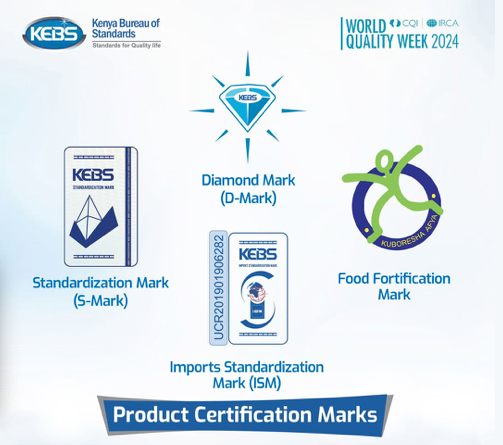
by Mr. Maroa Noa | Nov 13, 2025 | Legal, Legal Framework, Marketing
Certification marks have become an essential tool in Kenya for promoting product quality, safety, and consumer confidence. Unlike trademarks, which distinguish the origin of a product, certification marks indicate that a product meets specific standards. They serve as a seal of trust between manufacturers and consumers while supporting economic growth and industry competitiveness.
By understanding how certification marks function and their impact on both business and consumers, Kenyan manufacturers can better leverage these tools for market success.
What Are Certification Marks?
A certification mark is a type of intellectual property that signals compliance with established quality or safety standards. These marks are granted by authorized institutions after products, processes, or services undergo rigorous testing.
In Kenya, the Kenya Bureau of Standards (KEBS) plays a central role in issuing certification marks. Firms that meet KEBS or other approved standards receive this recognition, which reassures consumers about the quality, reliability, and safety of the product.
For a broader understanding of Kenya’s IP framework, you can explore Kenya’s Property Framework Guide.
The Role of Certification Marks in the Economy
Certification marks provide multiple benefits to the Kenyan economy and the manufacturing sector.
1. Enhancing Consumer Trust
Certification marks communicate quality and safety assurance. Consumers are more likely to choose products carrying recognized marks, knowing they meet established standards. This trust boosts brand loyalty and repeat purchases.
2. Supporting Market Competitiveness
Firms with certification marks can differentiate their products in crowded markets. By demonstrating compliance, manufacturers gain a competitive advantage locally and internationally, particularly in export markets.
3. Encouraging Industry Standards
Certification marks promote uniform standards across industries. Companies strive to maintain quality benchmarks, leading to overall improvement in production processes, product durability, and service delivery.
For insight into how IP promotes commercial value, see How to Boost Commercial Value from Intellectual Property.
Key Institutions in Certification Marks
Several organizations manage certification marks in Kenya:
-
Kenya Bureau of Standards (KEBS): KEBS certifies products and ensures adherence to national and international standards.
-
Kenya Industrial Property Institute (KIPI): KIPI oversees intellectual property rights, including certification marks, and protects the interests of innovators.
-
Private Certification Bodies: Certain industry-specific bodies issue marks that align with global quality standards, such as ISO 9001 certification for quality management.
By collaborating with these institutions, manufacturers can ensure their products meet recognized benchmarks and gain market credibility.
Economic and Consumer Benefits
1. Promoting Export Readiness
Products with certification marks are more attractive in international markets. Exporters demonstrate compliance with global standards, increasing their ability to compete and secure foreign contracts.
2. Reducing Counterfeiting and Imitation
Certification marks help curb counterfeit products. When consumers recognize a trusted mark, they are less likely to purchase substandard or fake products. For a deeper understanding of counterfeiting protection, read The Role of KIPI in Combating Counterfeiting.
3. Encouraging Continuous Improvement
Certification motivates manufacturers to invest in quality management systems, staff training, and R&D. Over time, this improves operational efficiency, product reliability, and customer satisfaction.
Challenges Facing Certification Marks in Kenya
Despite their benefits, certification marks face some hurdles:
-
Limited Awareness: Many SMEs do not fully understand the benefits or application process for certification marks.
-
Cost of Compliance: Testing and certification can be expensive, especially for small businesses.
-
Enforcement Gaps: Without strict monitoring, some firms may misuse marks, undermining trust.
Addressing these challenges requires targeted education, financial incentives, and stronger regulatory enforcement.
Strategic Approaches to Maximising Certification Mark Benefits
Manufacturers can adopt several strategies to leverage certification marks effectively:
-
Educate Stakeholders: Train employees and management about the benefits and requirements of certification marks.
-
Integrate Quality into Business Strategy: Align quality standards with production processes to consistently meet certification criteria.
-
Collaborate with Regulatory Bodies: Engage KEBS, KIPI, and industry associations to stay updated on compliance and standards.
-
Promote Marks to Consumers: Use marketing and branding strategies to highlight certified products, enhancing trust and sales.
These approaches ensure that certification marks are not just regulatory obligations but tools for competitive advantage.
Certification marks in Kenya strengthen consumer confidence, support manufacturing growth, and promote industrial competitiveness. By providing a clear signal of quality and compliance, they help businesses differentiate themselves in the market, gain export opportunities, and reduce the impact of counterfeit goods.
A strategic approach — combining awareness, enforcement, and quality-driven business practices — allows manufacturers to maximize the economic and reputational benefits of certification marks.
Learn more about boosting quality, IP, and consumer trust through Clarity Pharma Consultancy’s insights:
FAQs

by Mr. Maroa Noa | Nov 13, 2025 | Law, Legal, Marketing, Operations
In Kenya, the intersection of gender and intellectual property (IP) presents both a challenge and an opportunity. Women, despite their substantial contributions to innovation, creativity and enterprise, often encounter systemic barriers in protecting and commercialising their inventions and creative works.
The Kenya Industrial Property Institute (KIPI) plays a pivotal role in addressing this gap, and its initiatives increasingly offer a pathway toward gender-inclusive innovation.
Understanding the Gender Gap in Intellectual Property
It is essential to recognise that the gender gap in IP is neither incidental nor trivial. Globally, the World Intellectual Property Organization (WIPO) reports that only about one-third of international patent applications list a woman inventor, thereby indicating a persistent imbalance.
In Kenya, research by the Kenya Institute for Public Policy Research and Analysis (KIPPRA) similarly reveals that women-owned firms are less likely to innovate and to engage in IP registration than their male counterparts.
Several factors contribute to this disparity: limited awareness of IP rights among women entrepreneurs; fewer mentorship and networking opportunities; constrained access to funding; and social norms that undervalue women’s inventive and entrepreneurial contributions. In effect, although women may innovate or create, the transformation of those ideas into protected, commercial assets remains uneven.
The Role of KIPI in Promoting Women’s Participation in IP
As Kenya’s national IP office, KIPI is mandated to register patents, trademarks, industrial designs and utility models, and to promote IP awareness across sectors. Its work is therefore central to realising more inclusive innovation. For example:
- KIPI has been instrumental in training entrepreneurs, including women drawn from more than 20 counties, on the significance of IP protection in business.
- In collaboration with WIPO and other partners, KIPI supports programmes that help inventors, micro, small and medium enterprises (MSMEs) to protect their ideas and commercialise them.
- KIPI’s awareness-survey of 2020 shows the gender distribution of respondents (male vs female) in enterprises and individuals engaging with IP. While roughly 39 % were female in some categories, the data highlight the potential to increase women’s engagement.
Through such measures, KIPI is helping to bridge the gender gap by making IP services more accessible and by encouraging women innovators to step forward.
Key Initiatives and Their Impact
1. Decentralised Training and Sensitisation
KIPI has implemented outreach programmes across Kenya to sensitise entrepreneurs—including women—about the value of IP. The “Decentralisation of IP Services” project trained over 300 women entrepreneurs from 20+ counties. Business Today Kenya Among the outcomes was the commercialisation of crafts (such as sisal basketry) from cottage activity into full-time businesses, emphasising how IP awareness can catalyse economic transformation.
2. Inventor Assistance Programme (IAP)
Under the “Inventor Assistance Programme”, launched in Kenya in partnership with WIPO, KIPI links inventors—including women—with volunteer patent attorneys or agents who help guide the filing and protection process. Such initiatives reduce the cost, complexity and risk associated with IP protection, thereby making it more attainable for women-led innovations.
3. Policy and Strategy Engagement
KIPI is also involved in Kenya’s third-attempt National Intellectual Property Policy and Strategy (NIPPS), which explicitly acknowledges the low participation of women, SMEs and universities in IP filings. By shaping policy with gender and inclusion in mind, KIPI helps to create an enabling environment for women in IP.
Why Focus on Women and IP Matters
When women innovators are fully included, the benefits are manifold. First, protecting IP empowers women to monetise their creativity and inventions, contributing to income generation and economic empowerment.
Second, greater women participation in innovation fosters diversity of ideas and broadens the problem-solving pool — a necessity in sectors such as agriculture, health, manufacturing and digital technologies. As WIPO notes, failing to tap into women’s innovative potential undermines overall innovation capacity.
Third, inclusive IP regimes help address gender-inequities more broadly, signalling value for women’s contributions and reinforcing their role as change-makers rather than mere participants.
Remaining Challenges and What Must Be Addressed
Despite progress, several hurdles persist:
- Awareness and education gaps: Many women entrepreneurs remain unaware of IP rights or do not understand how to navigate IP registration and commercialisation.
- Resource constraints: Filing and maintaining IP rights can be costly; women entrepreneurs often lack access to funding or legal networks.
- Cultural and social barriers: Gender-norms may limit women’s confidence or access to networks crucial for innovation and IP processes.
- Digital and technical divide: Since IP filing increasingly involves digital systems, women at the margins may be disadvantaged by less access to devices and digital skills.
- Data and measurement: Accurate, gender-disaggregated data on IP participation remain limited, hindering targeted interventions.
Given these constraints, a multi-pronged approach is required—one that combines policy reform, training, mentorship, financial support and cultural change.
Practical Tips for Women Innovators in Kenya
If you are a woman in Kenya with an idea, invention or creative work, here are some steps you can take:
- Educate yourself on IP basics: Understand what patents, utility models, trademarks and industrial designs are. For example, the registration requirements in Kenya include naming the applicant, description, claims, and drawings where necessary.
- Seek out training programmes: Tap into KIPI outreach events or partner-organisations that train entrepreneurs on IP.
- Leverage mentorship: Participate in programmes such as the IAP where you can be paired with a volunteer patent attorney or agent.
- Secure your funding: Explore grants, accelerator programmes or partnerships that support women innovators and reduce cost barriers.
- Document and protect early: Even if you cannot afford full registration yet, keep documentation of your innovation—design sketches, prototypes, lab notebooks, creative drafts.
- Commercial-thinking: Consider how your innovation can be taken to market—not merely protected. IP works best when it is part of a commercial strategy.
- Network and join communities: Build connections with other women innovators, IP professionals, industry players and mentors.
- Use existing IP systems: Register your rights with KIPI and follow up on maintenance, enforcement and commercial exploitation.
The inclusion of women in Kenya’s intellectual property ecosystem is not simply a matter of equity; it is a strategic imperative.
The Kenya Industrial Property Institute is increasingly playing a transformative role through awareness training, assistance programmes and policy engagement that help bridge the gender gap. When women’s innovations are protected and commercialised, the entire economy benefits—not least through stronger entrepreneurship, job creation and diversification.
FAQs