Hello world!
Welcome to WordPress. This is your first post. Edit or delete it, then start writing!
Welcome to WordPress. This is your first post. Edit or delete it, then start writing!
Smart Agriculture is transforming farming systems across Kenya. Farmers increasingly depend on high-quality inputs—fertilizers, certified seeds, and reliable tools—to achieve better yields.
To support this growth, the Kenya Bureau of Standards (KEBS) enforces strict quality and safety requirements that protect farmers, consumers, and the environment.
This article explains the KEBS standards that guide fertilizer production, seed certification, and agricultural tool quality. It provides simple explanations, short sentences, and well-structured sections for easier understanding.
KEBS standards improve the safety, reliability, and performance of agricultural inputs. They help reduce counterfeit fertilizers, protect farmers from fake seeds, and ensure that tools meet minimum durability expectations.
These standards also support national food security goals. Because farmers rely heavily on agricultural inputs, quality control prevents crop failure, soil damage, and financial losses.
Fertilizers must meet specific chemical, physical, and safety requirements under Kenyan Standards. KEBS regulates both locally produced and imported fertilizers.
KEBS provides standards for:
Nitrogen fertilizers
Phosphate fertilizers
Potassium fertilizers
Compound fertilizers
Micronutrient fertilizers
Organic and bio-fertilizers
Each category must meet purity levels, nutrient composition requirements, and packaging guidelines.
Before fertilizers reach the market, KEBS conducts strict testing to confirm:
Nutrient composition
pH levels
Moisture content
Heavy metal contamination
Granule size consistency
These tests protect farmers from adulterated or ineffective fertilizers.
Fertilizer labels must clearly indicate:
Nutrient ratios (e.g., NPK 17:17:17)
Batch number
Manufacturer details
Handling instructions
Expiry date
Good labeling ensures transparency and allows traceability.
Seed quality is central to Smart Agriculture. Certified seeds improve yields, crop uniformity, and resistance to pests and diseases. KEBS works closely with agencies such as the Kenya Plant Health Inspectorate Service (KEPHIS) to enforce seed standards.
Seeds must meet standards for:
Genetic purity
Germination percentage
Moisture content
Seed health
Physical cleanliness
These requirements prevent farmers from planting weak or contaminated seeds.
Certified labs perform:
Germination tests
Moisture analysis
Seed health checks
Purity tests
Field inspections are also conducted to ensure that parent plants meet genetic and varietal standards.
Seed packaging must provide:
Variety name
Lot number
Purity percentage
Germination rate
Net weight
Treatment status
Clear labeling helps farmers make informed purchase decisions.
Tools and equipment play a huge role in Smart Agriculture. KEBS ensures they meet durability, safety, and performance requirements.
Standards cover simple and advanced farm tools, including:
Hoes
Spades
Fork jembes
Sprayers
Irrigation equipment
Protective gear
Harvesting tools
Each tool must meet specific material and strength criteria.
KEBS tests agricultural tools for:
Structural strength
Ergonomic design
Blade quality and sharpness
Material durability
Safety performance
These assessments reduce farm injuries and tool failure.
Imported farm tools undergo pre-export verification to confirm quality before entering the Kenyan market.
Farmers and suppliers can comply with KEBS requirements by:
Buying certified fertilizers and seeds
Checking for KEBS S-Mark or Import Standardization Mark
Verifying batch numbers and labels
Following storage and handling instructions
Reporting suspicious products to KEBS
Working with registered agro-dealers
These steps prevent losses and promote responsible farming.
Many businesses fail KEBS inspections because of:
Poor documentation
Wrong product labeling
Selling uncertified seeds or fertilizers
Weak storage conditions
Lack of traceability
Correcting these mistakes improves credibility and reduces regulatory penalties.
Complying with KEBS standards helps:
Increase crop yields
Improve soil health
Reduce counterfeit products
Build consumer and farmer trust
Support export opportunities
Enhance overall agricultural productivity
These benefits make compliance a strategic investment.
Achieving full compliance with KEBS standards requires technical knowledge, documentation, and ongoing quality checks. Clarity Pharma Consultancy helps agro-dealers, fertilizer companies, and seed suppliers with:
Gap assessments
Product documentation support
Label compliance reviews
KEBS application assistance
Staff training
Audit preparation
Their team ensures a smooth and timely compliance journey for agricultural businesses in Kenya. This professional support helps companies meet regulatory requirements without unnecessary delays.
KEBS standards play a vital role in strengthening Smart Agriculture in Kenya. They protect farmers from counterfeit inputs, ensure product safety, and promote sustainable agricultural practices. By meeting these standards, businesses support national food security goals and gain higher credibility in the market.
Sustainability is no longer optional. It is a core requirement for responsible production and long-term business growth.
In Kenya, the Kenya Bureau of Standards (KEBS) is leading the shift toward greener manufacturing by developing standards that protect the environment, encourage innovation, and promote safe industrial practices.
This article explains how KEBS is greening the manufacturing sector, why sustainability standards matter, and what companies must do to comply. The information is presented in clear, short sentences for easy reading.
Kenya’s manufacturing sector continues to grow, but this growth must balance economic progress with environmental responsibility. Rising waste levels, increased pollution, and inefficient energy use threaten public health and natural ecosystems.
Sustainability standards help businesses reduce waste, conserve energy, and adopt cleaner technologies. They also support Kenya’s global commitments under the UN Sustainable Development Goals (SDGs) and the Paris Agreement on climate change.
KEBS develops, monitors, and enforces national standards that guide sustainable manufacturing practices. These standards help industries adopt cleaner production methods, reduce emissions, improve waste management, and protect consumer health.
Key responsibilities include:
Creating environmental and sustainability standards
Auditing manufacturers for compliance
Certifying environmentally friendly products
Ensuring safe waste disposal practices
Monitoring energy-efficient technologies
KEBS also supports industries through training and public awareness programs.
KEBS has established several sustainability-focused standards that guide manufacturing practices. Below are some of the most essential ones.
This standard helps businesses minimize environmental impact. It guides companies on:
Reducing waste at source
Preventing pollution
Conserving natural resources
Monitoring environmental performance
ISO 14001 also reinforces regulatory compliance and enhances company reputation.
Energy efficiency is a major priority for Kenyan industries. KS ISO 50001 helps companies track energy use, reduce consumption, and lower operational costs. Manufacturers that follow this standard often save millions in annual energy expenses.
KEBS has introduced packaging guidelines that encourage:
Use of recyclable materials
Reduction of single-use plastics
Proper labeling for waste disposal
Lightweight and eco-friendly designs
These standards support Kenya’s efforts toward a circular economy.
KEBS certifies products that meet environmental safety requirements. The certification process focuses on:
Non-toxic materials
Minimal ecological footprint
Energy efficiency
Safe disposal guidelines
Green certification helps consumers choose safer, eco-friendly products.
KEBS drives environmental sustainability through practical initiatives that touch every part of the manufacturing process.
Manufacturers are encouraged to adopt technologies that use fewer resources and generate less waste. These include water recycling systems, energy-efficient machinery, and low-emission boilers.
KEBS works closely with industries to promote recycling, waste segregation, and safe chemical disposal. These programs reduce pollution and improve factory hygiene.
KEBS offers guidance to manufacturers developing eco-friendly products. This includes input on raw materials, labeling requirements, and safety standards.
KEBS monitors the market to identify banned chemicals, unsafe plastics, and products that violate environmental standards. Continuous surveillance ensures safer products reach consumers.
Complying with sustainability standards offers many advantages:
Lower production costs due to resource efficiency
Stronger brand reputation
Easier access to local and international markets
Reduced regulatory risks and penalties
Improved worker health and safety
Sustainability is good for the environment and beneficial for business.
Below is a simplified roadmap for businesses seeking compliance.
Manufacturers should begin by reviewing the standard that applies to their product or process. KEBS provides guidelines through its online library and consultation desks.
A company must review its current operations and identify areas that need improvement. This includes checking waste levels, energy consumption, water usage, and chemical handling.
This system should include:
Clear environmental policies
Waste management plans
Resource monitoring tools
Staff training programs
Emergency response procedures
KEBS allows businesses to apply for environmental or sustainability certification through its product and system certification schemes.
KEBS auditors visit manufacturing sites to verify compliance. They check environmental controls, waste management practices, and documentation.
Compliance does not end with certification. Manufacturers must maintain daily environmental controls, update documentation, and prepare for regular surveillance audits.
Achieving sustainability requires expert guidance. Clarity Pharma Consultancy helps manufacturers implement KEBS environmental standards through:
Detailed sustainability assessments
Documentation support
Training on ISO 14001 and ISO 50001
Waste management guidance
Pre-audit preparation
Compliance monitoring
Their support ensures smooth certification and long-term sustainability improvement. Businesses seeking greener operations can rely on professional, science-based guidance tailored to Kenyan requirements.
Sustainability is shaping the future of Kenyan manufacturing. Through strong standards, continuous monitoring, and active support programs, KEBS is helping industries reduce environmental impact and improve operational efficiency.
Manufacturers that align with these standards gain competitive advantages and contribute to a greener, healthier nation. The journey begins with awareness, preparation, and consistent commitment to environmental responsibility.
Product packaging is more than a creative exercise. It is a legal requirement that determines whether your product can enter the Kenyan market.
KEBS (Kenya Bureau of Standards) enforces strict guidelines to ensure that packaging protects the product, informs consumers, and supports fair trade.
This article presents a simple, clear, and visual guide to KEBS-compliant packaging—from the first label design to final placement on the shelf.
KEBS-approved packaging gives consumers confidence. It assures them that the product is safe, correctly labeled, and meets the required Kenyan Standard.
Compliant packaging also reduces the risk of penalties, product seizures, and delayed approvals. As a result, manufacturers enjoy uninterrupted distribution and increased market acceptance.
KEBS standards guide manufacturers on what to include on labels, how to present the information, and which packaging materials are allowed. These requirements protect consumers from misinformation and unsafe products.
Key areas include:
Mandatory label information
Accurate product claims
Proper packaging material
Legible text and durable printing
Correct use of certification marks
These components work together to ensure that products meet national quality expectations.
A KEBS-compliant label contains specific mandatory information. Each detail must be clear, visible, and readable throughout the product’s shelf life.
Every product label must include:
Product name
Brand name
Net weight or volume
Ingredients
Manufacturer details
Country of origin
Batch number
Date of manufacture
Expiry or best-before date
Storage instructions
Usage instructions (where applicable)
Labels must present honest and verifiable claims. KEBS strictly prohibits exaggerated statements or false therapeutic benefits.
Manufacturers must also ensure that nutritional facts, warnings, and pictorial representations match the actual product characteristics.
Good label design enhances readability. KEBS requires:
Permanent printing
Contrasting colors
Easy-to-read fonts
Consistent text placement
Information must remain visible even after handling or transportation.
Packaging must protect the product until the consumer uses it. KEBS guides manufacturers on appropriate materials based on product type.
Materials must not contaminate the product. For food, cosmetics, and pharmaceuticals, packaging should be:
Food-grade
Non-toxic
Moisture-resistant
Tamper-proof
Hygienically safe
Packaging must withstand:
Transportation
Storage conditions
Retail handling
Weak packaging may compromise safety and reduce shelf life.
KEBS encourages recyclable materials. Manufacturers should avoid harmful plastics and adopt sustainable packaging where possible.
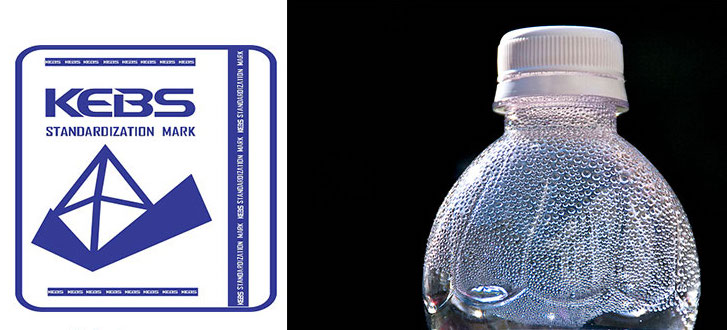
Products covered under Kenyan Standards must display the correct KEBS mark. Proper use of these marks demonstrates compliance and builds consumer trust.
This mark is mandatory for locally manufactured regulated goods. It confirms compliance with Kenyan Standards.
This premium mark is issued to high-quality products with superior performance.
Imported products use this mark after passing pre-export verification.
Certification marks must:
Appear on the front or a visible face
Be proportional to the packaging
Remain clear after printing
Incorrect use may cause rejection during inspections.
Once the label and packaging are ready, manufacturers must follow several steps before releasing products into the Kenyan market.
Start by verifying the accuracy of all printed details. Ensure the artwork matches KEBS requirements and the correct certification mark is used.
KEBS reviews:
Label design
Packaging material
Mandatory information
Safety compliance
The review ensures the product is ready for certification.
KEBS tests products in accredited laboratories. The tests confirm:
Safety
Quality
Performance
Label accuracy
Only compliant products move to the next stage.
Once the product meets all requirements, KEBS grants a Standardization Mark or any other applicable certification mark.
KEBS performs market surveillance to ensure continued compliance. This includes:
Random sampling
Label checks
Shelf inspections
Packaging verification
Manufacturers must maintain high-quality packaging standards throughout the product lifecycle.
Many products fail compliance due to small but critical errors. Avoid:
Missing mandatory label details
Incorrect ingredient lists
Misplaced certification marks
Faded or low-quality printing
Weak packaging materials
Non-standardized fonts and colors
Unverified product claims
Identifying these issues early saves time and reduces losses.
Consumers trust products that appear safe, professional, and compliant. Proper packaging ensures:
Clear communication
Accurate information
Product safety
Market credibility
Legal acceptance
Brands that prioritize packaging compliance achieve better customer loyalty and stronger market presence.
Achieving KEBS-compliant packaging requires strong documentation, accurate label design, and adherence to Kenyan Standards. Clarity Pharma Consultancy helps businesses through:
Packaging audits
Label compliance checks
Certification support
Product claim verification
Pre-market preparation
Staff training on labeling rules
Their team ensures smooth, reliable, and timely compliance for all product categories. With expert support, your products are ready for the shelves with confidence.
From the first label draft to the final shelf display, packaging must follow KEBS requirements to enter the Kenyan market. Compliant packaging protects consumers, supports fair trade, and strengthens brand credibility.
By understanding the process and preparing early, businesses can avoid delays and ensure that their products meet national standards.
Global standards help countries align with international best practices. However, each nation operates under unique economic realities, cultural contexts, and regulatory frameworks. Kenya is no exception.
The Kenya Bureau of Standards (KEBS) works to bridge global norms and local needs. It does this by adapting International Organization for Standardization (ISO) standards into practical, locally relevant requirements. This alignment helps Kenya strengthen quality assurance, support industry growth, and enhance consumer protection.
This article explains how KEBS adapts ISO standards, why this process matters, and how businesses can comply effectively.
ISO develops voluntary, globally recognized standards that guide quality, safety, and efficiency across industries. These standards help businesses compete internationally by harmonizing expectations.
Examples include:
ISO 9001 – Quality Management Systems
ISO 22000 – Food Safety Management Systems
ISO 14001 – Environmental Management
ISO 45001 – Occupational Health and Safety
These frameworks provide the foundation, but KEBS tailors them to support Kenya’s economic goals.
KEBS adapts ISO norms to ensure they fit Kenya’s market conditions. Local industries face unique challenges such as resource limitations, infrastructure gaps, and varying technological capabilities. Adapting standards makes them practical and achievable.
Localized standards also help:
Improve product quality
Protect public health
Enhance environmental sustainability
Strengthen trade competitiveness
This process ensures that global quality expectations align with Kenya’s economic progress.
KEBS follows a structured approach when transforming ISO standards into Kenyan Standards (KS). The steps below highlight the process.
KEBS begins by studying the original ISO document. Technical committees examine each section and determine its relevance to Kenya’s context.
These committees include experts from:
Government ministries
Private sector associations
Academia
Consumer groups
Their combined knowledge ensures that Kenya adopts standards that reflect both global best practices and local realities.
Next, KEBS evaluates Kenya’s economic structure. This includes the capacity of local manufacturers, existing technologies, and the regulatory environment.
For example:
Small businesses may lack advanced technology.
Rural regions may need flexible compliance requirements.
Product testing facilities may vary across counties.
These considerations shape the localized version of the standard.
KEBS then adjusts ISO norms to fit Kenyan needs. Adjustments may include:
Simplifying documentation requirements
Modifying testing parameters
Setting achievable compliance timelines
Aligning with existing national laws
The final version remains aligned with ISO principles but becomes more realistic for Kenyan businesses.
Once finalized, KEBS publishes the standard as part of the Kenya Standards Catalogue. Businesses can access the documents to guide compliance and certification.
After publication, KEBS establishes certification programs that support implementation. Examples include:
Standardization Mark (S-Mark)
Diamond Mark of Quality
System Certification (ISO-based certification)
These programs validate that organizations apply the localized standards consistently.
Localizing standards creates a balanced environment where businesses meet global expectations without excessive cost or complexity.
Localized standards allow small and medium enterprises (SMEs) to comply more easily, helping them grow and compete.
Standards related to food, construction, and pharmaceuticals become practical to implement, leading to safer products.
Kenyan goods become more acceptable in international markets because they align with ISO-based requirements.
Businesses avoid excessive financial strain because standards are tailored to local economic capacities.
Clear, achievable requirements create room for innovation and improved production efficiency.
Despite the benefits, some challenges still arise.
Limited training and awareness
High cost of compliance for small firms
Inadequate testing facilities in remote regions
Resistance to change within organizations
With proper support, businesses can navigate these challenges effectively.
Businesses can streamline compliance by:
Reviewing applicable Kenyan Standards
Training staff on quality and safety requirements
Implementing internal audits
Maintaining proper documentation
Engaging expert consultants for guidance
Staying compliant protects consumers and strengthens your market reputation.
Meeting localized ISO standards requires deep understanding and careful implementation. Clarity Pharma Consultancy offers support that helps businesses:
Interpret Kenyan Standards correctly
Develop ISO-aligned quality systems
Prepare documentation for certification
Train staff on compliance requirements
Conduct internal audits and pre-certification assessments
Their team ensures businesses meet KEBS expectations smoothly and avoid costly certification delays. For companies aiming to strengthen quality assurance, Clarity Pharma provides the right expertise to move forward confidently.

Ethical conduct and accountability form the backbone of effective standardization. In Kenya, the Kenya Bureau of Standards (KEBS) promotes these values through a formal Code of Practice that guides manufacturers, importers, regulators, and industry stakeholders.
This Code ensures that all parties uphold transparency, fairness, and responsibility when developing, implementing, and complying with standards. It strengthens market integrity and protects consumers from unsafe or substandard products.
This article explains the KEBS Code of Practice, outlines its ethical principles, and provides a clear guide on achieving compliance in an ethical and accountable manner.
The KEBS Code of Practice sets out expected ethical behaviours and professional standards for individuals and organizations engaged in standardization activities. It functions as a governance tool that promotes:
Responsible decision-making
Fair participation in standards development
Honest communication
Transparency in certification processes
Respect for consumer welfare
The Code ensures that standardization is not only technically sound but also morally grounded.
Ethics drive trust. When manufacturers follow ethical guidelines, consumers gain confidence in local and imported products. Ethical conduct also helps businesses stay compliant with the law, avoid penalties, and maintain strong reputations.
Moreover, ethical standardization protects vulnerable populations. It prevents the circulation of unsafe goods, misleading claims, and counterfeit certifications. This strengthens public safety and promotes fair competition in the marketplace.
The Code is anchored on several key principles that shape responsible behavior.
KEBS emphasizes honesty and fairness in all certification and inspection activities. Decisions must be objective and guided by verifiable evidence rather than personal interest.
Clear and open communication is essential. Manufacturers must provide truthful information during audits, while KEBS must communicate decisions and requirements clearly.
Both businesses and regulators must demonstrate the technical knowledge and skill needed to maintain quality standards. This ensures consistency and reliability.
Every stakeholder is responsible for their decisions and actions. This includes proper documentation, adherence to procedures, and willingness to correct mistakes.
The ultimate goal of the Code is to protect consumers. Products must meet safety and quality standards before entering the market.
Manufacturers carry major responsibilities under the KEBS Code of Practice. These duties ensure that the production process aligns with ethical principles.
Provide accurate product information
Maintain honest communication with KEBS inspectors
Ensure staff integrity and competence
Document processes truthfully
Prevent the use of misleading labels
Avoid shortcuts that compromise safety
Ethical production creates long-term trust and supports sustainable market growth.
Accountability ensures that every action can be traced, verified, and justified. This reduces risks, improves quality management, and prevents unethical behavior.
Businesses demonstrate accountability by:
Keeping updated records
Following standard operating procedures
Adhering to inspection and testing requirements
Addressing non-conformities quickly
Reporting changes in production methods
These actions help maintain consistent quality and support regulatory compliance.
KEBS promotes ethics through enforcement, guidance, and continuous monitoring. Its responsibilities include:
Auditing factories to verify compliance
Testing products in accredited laboratories
Issuing certification marks based on evidence
Providing public awareness on standards and safety
Taking action against counterfeiters and violators
This ensures that the Kenyan market remains fair, safe, and trustworthy.
A proactive approach helps businesses stay compliant. Below are key steps for aligning operations with KEBS expectations.
Start by reviewing standards that apply to your products. KEBS provides a categorized database for easy access.
Employees should understand their ethical responsibilities, especially those involved in quality control and certification.
Clear and accurate documentation supports accountability. It also simplifies audits and surveillance visits.
Share correct information with auditors, customers, and suppliers. Transparency minimizes risks.
Internal audits help identify issues before KEBS inspections. They also improve compliance readiness.
Admitting mistakes shows responsibility. It also helps resolve problems faster and prevents penalties.
Businesses often face compliance challenges due to avoidable violations. Common issues include:
False declarations during certification
Misleading product labels
Bribery or unethical attempts to influence audits
Poor staff training
Incomplete documentation
Failure to correct identified non-conformities
Avoiding these behaviours protects your certification and strengthens brand reputation.
When businesses follow ethical guidelines, they gain significant advantages:
Increased consumer trust
Better relationships with regulators
Smooth certification processes
Reduced penalties and legal risks
Enhanced brand reputation
Stronger market competitiveness
Ethical compliance is not just an obligation—it is a strategic asset.
Navigating ethical and regulatory requirements can be challenging. Clarity Pharma Consultancy helps businesses align with the KEBS Code of Practice by offering:
Ethical compliance training
Documentation and policy development
Label integrity reviews
Pre-audit preparation
Quality management system support
Continuous compliance guidance
With expert support, companies strengthen accountability and meet KEBS expectations confidently and efficiently.
Ethics and accountability are essential pillars of Kenya’s standardization ecosystem. The KEBS Code of Practice supports responsible manufacturing, transparent communication, and trustworthy certification processes.
When businesses follow these principles, they protect consumers, strengthen their credibility, and enhance their market position.
Turning an innovative idea into a market-ready product is one of the most exciting phases for any startup. Yet, no matter how brilliant your concept is, it must meet established quality and safety standards before it reaches consumers.
In Kenya, the body responsible for ensuring this level of quality is the Kenya Bureau of Standards (KEBS).
KEBS compliance is not just a legal requirement; it also builds customer trust, enhances brand credibility, and improves overall market competitiveness.
This guide breaks down the process—from concept to certification—into clear, manageable steps that any startup can follow.
KEBS develops, promotes, and enforces standards for all products manufactured or imported into Kenya. For startups, compliance ensures that your product is safe, consistent, and reliable.
More importantly, certification acts as a mark of quality, making it easier to win customer confidence and access wider markets.
Businesses that ignore compliance risk legal penalties, product recalls, and damage to their reputation. On the other hand, companies that embrace KEBS standards early experience smoother market entry and faster brand growth.
Before engaging with KEBS, you must have a clear understanding of your product. This stage involves describing what the product does, who it is meant for, and how it will be used.
A clearly defined product helps you:
Identify the correct applicable standards
Determine the required tests
Prepare accurate documentation
Estimate certification timelines and costs
For guidance in identifying relevant national or international standards, you can explore the Standards Catalogue on the KEBS website.
Every product category—whether food, cosmetics, electronics, building materials, or household goods—has specific standards. KEBS uses three types of standards:
Kenya Standards (KS)
East African Standards (EAS)
International Standards (ISO/IEC)
Startups should take time to understand these standards. Doing this early prevents costly errors during development and ensures your product design aligns with quality expectations.
Once you know the required standards, create your prototype. At this stage, conduct internal tests to assess quality, safety, and durability. While internal tests do not replace KEBS testing, they prepare you for formal evaluation.
Strong internal validation helps reduce failure rates during KEBS testing, saving both time and resources.
Documentation is a major part of compliance. KEBS typically requires:
Product description and specifications
Manufacturing processes
Safety data sheets (for chemicals)
Labels and artwork samples
Packaging details
Quality control procedures
Organizing these documents early not only speeds up the application process but also positions your startup as professional and reliable.
Once your product and documents are ready, submit your application through the KEBS Product Certification Scheme (Standardization Mark – S-Mark).
The S-Mark confirms your product has undergone testing and meets all quality requirements. It is mandatory for all locally manufactured products.
During this stage:
KEBS reviews your documents
Payment for testing and inspection is made
A physical factory inspection may be scheduled
After your application is reviewed, KEBS conducts detailed product tests in its accredited laboratories. These tests may include:
Chemical analysis
Microbiological tests
Mechanical strength assessment
Safety and performance evaluation
This is one of the most critical steps. If the product meets all requirements, KEBS moves you to the next stage. If not, they issue recommendations for improvement.
To ensure ongoing compliance, KEBS inspects your facility. The team checks:
Quality management systems
Production processes
Raw material handling
Hygiene and cleanliness
Staff competency
This inspection ensures that the product will consistently meet standards even after certification.
Once your product passes the required tests and the factory inspection is successful, KEBS issues the Standardization Mark permit.
This permit allows you to print the KEBS S-Mark on your product packaging. The mark assures consumers that your product has passed all safety and quality checks.
Certified brands often enjoy:
Higher customer trust
Better shelf placement in supermarkets
Easier entry into export markets
Compliance does not end with certification. KEBS conducts regular surveillance audits and product testing to ensure ongoing quality.
Startups should:
Update quality control processes
Monitor their raw materials closely
Renew KEBS certification annually
Keep documentation up to date
Maintaining compliance strengthens your brand’s reputation and keeps you competitive.
Moving from concept to certification may seem complex at first, but it is entirely manageable when approached step by step.
For startups, KEBS compliance is more than a legal requirement—it is an investment in product quality, consumer trust, and long-term business success.
By understanding standards early, documenting your processes, and maintaining quality, your startup can confidently enter the market with a product that meets both national and global expectations.

The Jua Kali sector symbolizes creativity, resilience, and hands-on ingenuity in Kenya. Artisans across the country— from metal fabricators in Gikomba to carpenters in Kariobangi—produce essential goods that millions rely on daily. The sector employs over 80% of Kenya’s workforce, making it one of the nation’s strongest economic pillars.
Despite its size and potential, many Jua Kali products struggle to access high-value markets. Limited certification, inadequate packaging, and inconsistent safety standards restrict their growth.
KEBS is now working to close this gap by supporting artisans and small enterprises to adopt standards that unlock new opportunities.
Most Jua Kali products are practical, durable, and innovative. However, many cannot compete with imported or branded goods because they lack:
Verified safety and durability testing
Standardized packaging and labels
Traceability systems
Formal business registration
Without these elements, buyers— especially supermarkets, institutions, and international markets— hesitate to stock uncertified items. The absence of certification also lowers consumer trust.
KEBS has introduced several inclusive strategies to help artisans meet standards without overwhelming them. These initiatives focus on training, accessibility, and affordability.
Technical standards can be intimidating. To solve this, KEBS developed simplified guidelines written in Kiswahili and visual formats. These versions help artisans understand requirements without needing advanced technical knowledge.
Regional KEBS offices now host MSME help desks dedicated to serving small-scale producers. Through county-level outreach missions, KEBS teams:
Train Jua Kali groups on relevant standards
Conduct on-site advisory and pre-certification assessments
Connect clusters to certification and testing services
KEBS collaborates with key partners such as:
Ministry of Trade
County governments
Ajira Digital
MasterCard Foundation
These collaborations support affordable testing, subsidized lab fees, and fast-tracked certification for youth and community-led enterprises.
Transitioning from informal production to certified manufacturing unlocks new opportunities.
Retail chains require certification before stocking products. With proper packaging and labeling, Jua Kali products can appear in supermarkets and digital marketplaces, increasing visibility and sales.
Certified goods can meet requirements under:
East African Community (EAC) Quality Framework
COMESA Harmonized Standards
African Continental Free Trade Area (AfCFTA) protocols
This opens access to regional and continental markets.
Products bearing the KEBS S-Mark or Diamond Mark signal reliability. Consumers associate these marks with safety and quality, improving loyalty and repeat purchases.
Standards promote consistency. Artisans who follow them reduce defects, cut waste, and improve durability. These improvements directly boost customer satisfaction.
A youth group in Kisumu provides a strong example of successful formalization. In 2022, they approached KEBS to seek compliance for their cookstoves. With structured support, the group:
Registered their association
Adopted simplified metal fabrication standards (KS 1828)
Received certification for their energy-saving stoves
Improved labeling and packaging
Today, their stoves supply county school feeding programs and sell on Jumia Kenya, expanding their market reach significantly.
Although progress is evident, the sector still faces major challenges:
Fear of bureaucracy or taxation
Limited literacy and digital access
Fragmented artisan clusters
Insufficient funds for audits or packaging
To address these issues, KEBS continues pushing for:
More county-level training hubs
Partnerships with microfinance institutions
Peer mentors within Jua Kali ecosystems
These measures aim to simplify the compliance journey for artisans.
KEBS encourages artisans to start small and grow gradually.
Staff will guide you on the standards needed for your products—such as metal tools, furniture, cooking appliances, or construction items.
This kit includes:
Simplified standards
Sample labels
Certification application forms
Access to subsidized testing
Cluster-based certification reduces costs because several artisans apply together.
Even before full certification, artisans can adopt safety and labeling standards. This step alone helps them qualify for many local tenders.
KEBS envisions a future where:
Every Jua Kali product carries a scannable, traceable S-Mark
Artisans supply national and county governments
Informal manufacturers participate in developing standards
Certification unlocks regional and international trade
Digital tools, mobile certification units, and county partnerships will continue making compliance easier and more accessible.
For Kenya’s artisans, standards are not obstacles. They are stepping stones to better markets, higher earnings, and long-term business growth.
KEBS is committed to supporting the Jua Kali sector, and the time is right for artisans to embrace certification as a path to opportunity.
Clarity Pharma Consultancy provides expert support for MSMEs and Jua Kali groups seeking certification. Their team helps with:
Understanding applicable standards
Preparing documentation
Improving labeling and packaging
Pre-audit assessments
Training artisans on compliance
They offer simplified guidance to make the certification journey faster, clearer, and more affordable.
Reach out today for tailored support that helps your products meet KEBS requirements and compete confidently in formal markets.

Kenya’s e-commerce boom has transformed how people shop. Platforms like Jumia, Kilimall, and social-media shops now deliver goods to homes across the country.
This revolution makes life easier. However, it has also exposed consumers to counterfeit goods, unregulated imports, and potentially unsafe products.
To protect buyers and level the playing field, KEBS now enforces standards for online retail. Whether you sell electronics, cosmetics, baby items, or packaged food — compliance with KEBS is not optional. It matters for credibility, legality, and consumer trust.
This article explores what online sellers in Kenya must know about KEBS standards, how to stay compliant, and the business benefits of alignment.
Online markets brim with variety, but they also attract substandard and unsafe goods. KEBS compliance ensures that only tested and certified products reach consumers.
The S-Mark (for local products), ISM (for imports), and the optional Diamond Mark form a recognized framework that assures safety and quality.
Under the Standards Act, Cap 496, traders — whether operating physical shops or online — must ensure regulated goods meet the relevant standards before sale. Selling without certification can lead to delisting, fines, or license revocation.
Online shoppers often lack the chance to physically inspect goods. When a listing displays a valid KEBS certification mark, it gives buyers confidence.
For sellers, it becomes a strong differentiator in a competitive market, especially in high-risk categories like electronics, cosmetics, or food.
This mark applies to goods manufactured locally in Kenya. Once KEBS verifies compliance with relevant Kenyan Standards (KS), the seller can display the S-Mark on the product and its online listing.
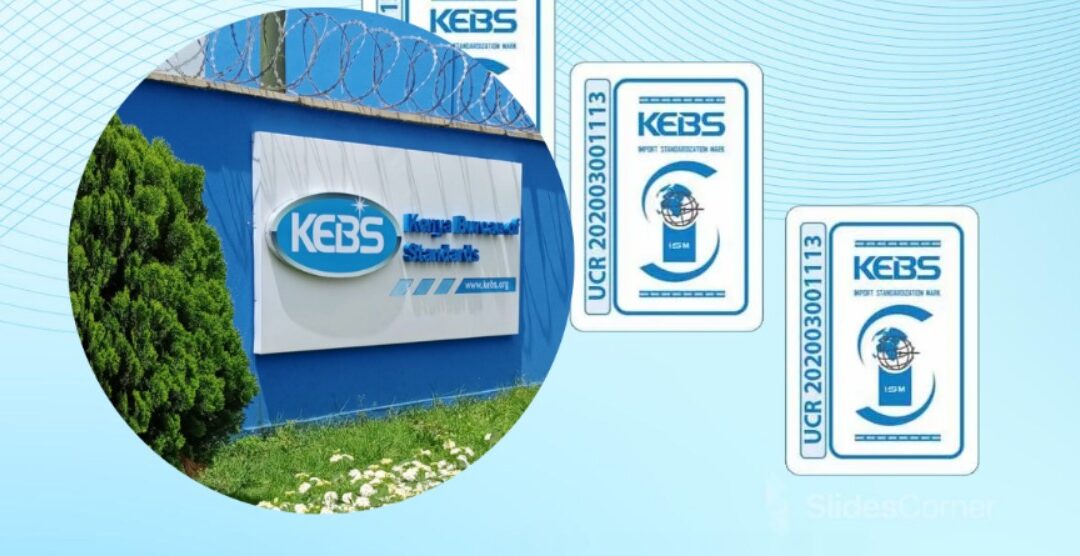
All imported finished products — from electronics to toys to cosmetics — must carry the ISM sticker before they enter the Kenyan market.
As of 2015, KEBS requires importers to obtain ISM certification under pre-export verification or destination inspection programs.
This is a premium, voluntary mark for manufacturers (local or foreign) that maintain high-quality systems and consistent product excellence. If you aim to position your brand as top-tier, this mark enhances credibility.
Online sellers must ensure that product labels and packaging comply with KEBS standards. That includes displaying the correct certification mark, permit/permit number where applicable, accurate product information (weight, origin, manufacturer), batch number or expiry (for perishables), and compliance with any sector-specific requirements (e.g., cosmetics, electronics).
Verify product certification before sourcing.
If sourcing locally, request a valid S-Mark or Diamond Mark permit from your supplier. For imports, insist on valid ISM certification and a legitimate Certificate of Conformity (CoC).
Display certification prominently on listings.
Use clear product images showing the KEBS mark and include the certification number or CoC details in your descriptions. Transparency builds buyer trust.
Register as a verified seller on e-commerce platforms.
Many marketplaces — in partnership with KEBS — now vet sellers for compliance. Register under verified vendor or official store programs where available.
Ensure packaging and labeling follow standards.
Before listing, audit your product labels and packaging. Make sure they meet KS requirements for your product category.
Keep source and batch documentation.
Maintain supplier invoices, batch numbers, CoC copies, and other relevant records. KEBS may request them during market surveillance or inspections.
Lack of awareness: Many small-scale online sellers do not know which standards apply. Overcome this by consulting KEBS guidelines or seeking expert advice.
Cost of certification: For SMEs, certification fees may seem steep. However, think of certification as an investment into brand credibility and long-term market access.
Unverified suppliers: Some suppliers may cut corners. Always verify certification status before listing.
Regulatory complexity across product categories: Different goods require different standards (electronics vs cosmetics vs food). Educate yourself or partner with compliance experts.
KEBS continues adapting to the growth of e-commerce. It now offers:
Digital product-verification portals, where consumers or retailers can check ISM/S-Mark validity.
Virtual vendor trainings and guidance, especially targeting SMEs.
Collaboration with major e-commerce platforms to integrate compliance checks into vendor onboarding.
These initiatives make compliance more transparent and manageable for legitimate online sellers.
Compliance brings many advantages:
Improved credibility and customer confidence. Listings with valid certification stand out and earn trust.
Reduced risk of delisting or penalties. Meeting legal standards avoids regulatory action.
Higher sales conversion and fewer returns. Certified products attract more buyers and lower complaints.
Access to institutional and B2B markets. Retail chains, government tenders, and corporate buyers often require KEBS-certified goods.
Better long-term sustainability. Certified businesses build stronger reputations and avoid market disruptions caused by substandard and counterfeit competition.
Navigating KEBS standards can be challenging — especially when you sell across multiple product categories. If you need help verifying supplier certification, auditing your product listings, preparing documentation, or ensuring full compliance: Clarity Pharma Consultancy offers professional guidance.
Reach out today for tailored support with KEBS compliance. With expert help, you can build trust, avoid compliance risks, and grow your online business confidently.
In today’s busy marketplace, shoppers face hundreds of choices every day. Counterfeits, substandard goods, and misleading labels make purchasing even more challenging.
Because of this, consumers rely more on certification marks to identify products they can trust.
In Kenya, the KEBS Standardization Mark (S-Mark) stands out as one of the strongest assurances of product quality and safety.
The Kenya Bureau of Standards (KEBS) developed this mark to help consumers distinguish genuine and compliant goods from unsafe alternatives. For businesses, it is a badge of credibility. For consumers, it is a seal of trust.
This article explains the S-Mark in simple, clear language. You will understand what it means, how companies obtain it, why it matters, and how it influences buying decisions across the country.
The S-Mark is a mandatory quality certification mark placed on locally manufactured products that meet the requirements of the relevant Kenya Standards (KS). It confirms that the product has been:
Tested in accredited laboratories
Verified for safety and quality
Manufactured in facilities that follow Good Manufacturing Practices (GMP)
Audited and approved by KEBS inspectors
You will find the S-Mark on products such as:
Packaged foods and drinks
Household electrical devices
Cosmetics and toiletries
Building and construction materials
Agricultural inputs and related goods
Different KEBS marks serve different purposes. Understanding each helps manufacturers choose the right certification path.
| Mark | Type of Product | Certification Purpose |
|---|---|---|
| S-Mark | Locally manufactured goods | Mandatory for most products |
| Diamond Mark (D-Mark) | High-quality local/export products | Voluntary premium certification |
| Import Standardization Mark (ISM) | Imported goods | Mandatory under the PVOC program |
The S-Mark acts as the baseline guarantee for quality and compliance for goods produced within Kenya.
Shoppers want products that are safe, reliable, and consistent. The S-Mark assures them that the item has passed verified quality and safety checks.
Under the Standards Act (Cap 496), eligible products must display the S-Mark before entering the market. Businesses that fail to comply risk:
Product seizures or recalls
Fines and penalties
Suspension from selling the product
Many supermarkets, government agencies, distributors, and export bodies require the S-Mark as part of supplier qualification.
Certified products are less likely to cause harm, helping businesses avoid legal claims and losses from poor-quality goods.
The certification process is structured and transparent. Below are the key steps.
Manufacturers begin by finding the correct standard that governs their product. KEBS’s standards catalog provides all relevant KS and EAS standards.
The manufacturer submits an application through the KEBS portal and uploads:
Company registration documents
Product formulation or recipe
Process flow diagram
Label artwork
Product sample details
Applicable fees
KEBS or accredited laboratories test samples to confirm compliance with chemical, physical, microbial, and labeling requirements.
KEBS inspectors visit the production facility to review:
Equipment and calibration records
Hygiene and sanitation practices
Staff competence
Quality control documentation
The audit ensures that the manufacturer can consistently produce safe and compliant products.
Once both the product and facility pass all requirements:
KEBS issues a one-year S-Mark Permit
The manufacturer receives a unique S-Mark code
The S-Mark can now be printed on product packaging
KEBS also performs periodic surveillance audits to ensure ongoing compliance.
Fake certification marks exist in the market. Consumers can confirm authenticity by:
Checking that the S-Mark includes a valid permit number
Confirming clear manufacturer details on the label
Using the KEBS SMS verification service
SMS Verification
Text the permit number to 20023 to instantly confirm authenticity.
KEBS Toll-Free Number: 1545
Certification marks influence how customers choose products. Studies show that buyers are more likely to:
Pay a premium for certified goods
Trust unfamiliar brands when certification is visible
Stay loyal to brands that maintain quality consistency
In Kenya especially, more consumers check for the S-Mark when buying electronics, baby food, cosmetics, fertilizers, and packaged foods.
Manufacturers often experience difficulties such as:
Product inconsistency leading to failed audits
Changes to Kenya Standards requiring adjustments
Labeling non-compliance (e.g., missing dates, wrong claims)
Failure to renew annual permits
To support manufacturers, KEBS offers:
Technical advisory services
Label compliance reviews
MSME training programs
Certification guidance clinics
The S-Mark is more than a regulatory requirement. It supports consumer protection, strengthens public health, and builds a trustworthy marketplace. The mark also encourages professionalism among manufacturers and prepares them for regional and international trade.
By improving product standards, the S-Mark raises confidence in Made-in-Kenya goods worldwide.
For manufacturers, the S-Mark signals quality, safety, and reliability. For consumers, it offers peace of mind in an unpredictable market.
Whether you are a startup or an established enterprise, obtaining and maintaining the S-Mark is a key investment in your brand’s reputation and long-term growth.
If your business needs support navigating the certification process, Clarity Pharma Consultancy offers reliable guidance. Their team provides assistance in:
KEBS certification preparation
Product documentation
Label and packaging compliance
Quality system setup
Audit readiness and staff training
With expert help, you can avoid delays, reduce errors, and achieve certification much faster.
Get professional support that aligns with KEBS standards and boosts your product credibility.