by Mr. Maroa Noa | Nov 20, 2025 | Legal, Marketing, Operations
In recent years, Kenya’s Pharmacy and Poisons Board (PPB) has embraced digital transformation by shifting many of its permit and licensing processes online.
This strategic move strengthens regulatory efficiency, improves stakeholder experience, and enhances transparency.
In this article, we’ll explore how this journey is unfolding, its benefits, and what it means for pharmacists, drug distributors, and the general public.
Why PPB Went Digital
-
Enhancing Efficiency
By digitizing licensing processes, the PPB significantly reduces paperwork, manual processing, and human error. Stakeholders can now apply, pay, and monitor their applications in real time via the PPB Online Services Portal.
-
Promoting Transparency
Online systems allow real‑time tracking of license status, so applicants always know where they stand. This reduces opacity and helps curb corrupt practices.
-
Boosting Compliance
The automated portal encourages higher compliance since it’s easier, faster, and more accessible. Stakeholders are more likely to renew their licenses and follow regulations.
Key Components of the PPB Online Permits & Licenses System
1. Online Services Portal
Through the PPB Online Services Portal, users can register an account, apply for various licenses, make payments, and download permits. This all-in-one platform streamlines the entire regulatory lifecycle.
2. eCitizen Integration
To access many PPB online services, users must log in via eCitizen, Kenya’s central government services portal. This ensures identity verification, enhances security, and aligns PPB services with national digital infrastructure.
3. Licensing for Premises and Practitioners
The PPB regulates both pharmacy premises and the practitioners (pharmacists, pharmaceutical technologists). Licenses for premises, annual practice, and other permits now go through the online system, speeding up approval and renewal.
4. Online Exams for Pharmacists
PPB now uses its portal to manage professional exams. For example, in June 2025, candidates registered and sat for online pre-registration and enrollment exams via the online system. This process reduces administrative burdens and improves accessibility.
5. Pharmacovigilance & Clinical Trials
Beyond routine licensure, PPB’s digital infrastructure supports clinical trial registration and pharmacovigilance reporting. Their Clinical Trials Registry and Electronic Pharmacovigilance Reporting System help streamline regulatory oversight of drug safety.
Major Benefits of the Digital Shift
-
Speed: Applications that once took weeks can now be processed faster due to electronic workflows.
-
Accessibility: Stakeholders anywhere in Kenya can apply for licenses, check status, or renew without physically visiting PPB offices.
-
Cost-savings: Reduces costs for both PPB and applicants (e.g., less paper, fewer visits).
-
Better Tracking & Auditing: Digital logs make it easier to audit applications, detect fraud, and ensure accountability.
-
Public Safety: With a live, updated register of licensed pharmacies, the public can verify the legitimacy of outlets — even by scanning QR codes on licenses.
Challenges & How PPB Is Addressing Them
-
Digital Literacy: Not all stakeholders may be comfortable with online systems. The PPB may need to provide training or user guides.
-
Internet Access: In remote areas, poor connectivity could hinder use of the portal. PPB may collaborate with local agencies to provide support.
-
Security Risks: Handling sensitive data online requires robust cybersecurity. PPB’s integration with eCitizen helps by leveraging existing secure identity systems.
-
Regulatory Adaptation: As services go digital (e.g., online pharmacies), PPB has proposed new rules to manage online prescribing, counselling, and medicine sales.
The Impact on Stakeholders
Pharmacists & Pharmaceutical Technologists
They benefit from simplified license renewals, faster permit approvals, and a centralized dashboard where they can track their submissions.
Pharmacy Owners / Premises
Owners can apply for premises registration, submit required documents online, and map compliance against PPB standards.
Drug Manufacturers & Importers
These parties can apply for Good Manufacturing Practice (GMP) inspections via digital forms. The portal also supports import/export registration, reducing bureaucratic delays.
Public / Consumers
Members of the public can verify if a pharmacy is licensed by checking PPB’s online registry — and even scanning a QR code on the displayed license. This boosts trust and safety.
Regulators
PPB itself gains from more streamlined internal workflows, better data, and improved capacity to enforce compliance.
Future Outlook
-
Expansion of Services: We may see more modules on the portal covering inspections, drug waste disposal, and enforcement.
-
Enhanced Analytics: Digital data gives PPB insights into licensing trends, compliance gaps, and risk areas.
-
Interoperability: The portal could integrate with other government systems (e.g., health records, national trade systems) to create synergies.
-
Regulating Online Pharmacies: As digital pharmacies grow, the PPB is expected to continue developing stricter regulatory frameworks.
The digital transformation at PPB marks a pivotal moment for Kenya’s pharmaceutical regulatory sector. By moving permits and licenses online, the Board not only enhances efficiency, but also strengthens transparency, compliance, and public trust.
This shift helps all stakeholders—from pharmacists and business owners to everyday Kenyans—navigate the system more easily.
As PPB continues to evolve, its focus on innovation and accessibility promises to shape a safer, more regulated pharmaceutical landscape.
FAQs

by Mr. Maroa Noa | Nov 19, 2025 | Legal, Legal Framework, Risk Management
Understanding the Threat of Counterfeit Medicines
Counterfeit or falsified medicines pose a serious threat globally and in Kenya. These products may contain incorrect doses, wrong ingredients, or harmful contaminants.
For instance, studies show that some fake anti-malarial drugs in Kenya contained lead, which caused kidney failure in one patient.
Given this risk, the PPB has intensified efforts to protect consumers and uphold medicine quality.
The Role of the PPB in Safeguarding Medicines
The PPB regulates the manufacture, importation, distribution and sale of drugs and poisons under the Pharmacy and Poisons Act.
It maintains standards, monitors the market, and works with partners to detect and remove counterfeit medicines.
Key Measures the PPB Uses to Fight Counterfeits
Market Surveillance and Product Verification
The PPB conducts routine sampling of medicines across pharmacies and health facilities. It analyses products in labs to check whether they meet specifications.
Additionally, the PPB helped roll out a mobile-based verification app (in partnership with innovators) that allows consumers to scan drugs and verify authenticity.
Collaboration with the Anti-Counterfeit Authority
In 2024, the PPB signed a Memorandum of Understanding (MoU) with the Anti‑Counterfeit Authority (ACA) to bolster joint actions against illicit medicines.
Through shared data, training, outreach and enforcement, the agencies strengthen their collective response.
Legal and Regulatory Crack-Downs
The government, via PPB and law-enforcement, issues warnings and takes action against illegal chemists and unlicensed distributors.
These actions help deter counterfeit trade and protect genuine supply chains.
How Consumers Can Verify Their Medicines
Consumers also have a role. Here are practical steps:
-
Purchase medicines only from licensed pharmacies.
-
Check that the premises display a valid pharmacy license and registration code.
-
Use verification tools (such as SMS or app services) to validate the drug.
-
If you suspect a fake product, keep the medicine pack, receipt and report to PPB via their hotline or email.
Why Removing Counterfeits Matters for Public Health
Counterfeit medicines undermine trust in health systems and risk lives. They can make diseases worse, cause drug-resistance, increase treatment costs and create economic burdens for households.
By removing falsified and sub-standard medicines, the PPB supports patient safety, strengthens the pharmaceutical sector and protects Kenya’s health outcomes.
What the Future Holds: Strengthening Systems and Technology
The PPB continues to modernise regulation. Further, new tech-platforms, enhanced imports monitoring and regional cooperation aim to make Kenya’s supply chain more resilient and transparent.
How Clarity Pharma Consultancy Can Assist
Keeping medicines authentic requires more than regulation alone — it needs the right systems, compliance checks and stakeholder awareness.
Clarity Pharma Consultancy offers professional guidance on pharmaceutical supply-chain audits, verification tools, staff training and regulatory alignment. If you operate in the pharmaceutical field and want to ensure your operations meet PPB standards, get in touch.
FAQs

by Mr. Maroa Noa | Nov 19, 2025 | Law, Legal, Operations
Ensuring medicine safety matters for every patient and provider in Kenya. This article walks you through the fundamentals of pharmacovigilance and shows how you can report adverse drug reactions (ADRs) effectively under the Kenyan system.
What Is Pharmacovigilance?
Pharmacovigilance refers to monitoring, detecting, assessing, and preventing adverse effects of medicines after they reach the market. It helps safeguard patients and improves medicine-use outcomes.
In Kenya, the Pharmacy and Poisons Board (PPB) maintains the national pharmacovigilance system.
The purpose is clear. Medicines that get regulatory approval still carry unknown risks when used in real-world settings. Pharmacovigilance fills that gap. It allows health professionals, manufacturers, and the public to report suspected ADRs and trigger safety actions.
Why Reporting Adverse Drug Reactions Matters
When ADRs go unreported, unsafe medicines might remain in use longer than they should. Conversely, reporting leads to:
-
safer patient care;
-
updated product information;
-
withdrawal of harmful products when needed;
-
improved public trust in health systems.
In Kenya, low reporting rates remain a barrier to full pharmacovigilance-effectiveness. A study noted that the number of ADR reports in Kenya was far lower than expected compared to population size.
The Kenyan Framework for ADR Reporting
The PPB issued Guidelines for the National Pharmacovigilance System in Kenya.
These guidelines define:
-
What to report (suspected ADRs, poor-quality medicines)
-
Who can report (healthcare providers, patients, manufacturers)
-
Where and how to report (forms, online / paper systems)
-
What happens to reports (analysis, signal-detection, regulatory action)
For example, the ADR reporting form (also known as the “Yellow Form”) is part of the toolkit.
Step-by-Step Guide: How to Report an ADR in Kenya
1. Recognise a Suspected ADR
Stay alert for any noxious and unintended response to a medicine, used at normal doses for prophylaxis, diagnosis, or therapy.
2. Gather Key Information
Collect essential data such as:
-
patient details (age, gender, health status)
-
medicine details (name, dose, batch, start date)
-
description of reaction (onset, outcome)
-
reporter’s details and contact
3. Complete the ADR Reporting Form
Use the PPB-approved form (paper or online). Ensure all mandatory fields are filled.
4. Submit the Report to the National Pharmacovigilance Centre
Send your completed form to the centre, which operates under PPB. Use email, online portal, or postal address as directed.
5. Follow Up & Retain Copies
Keep a copy of the report. Monitor the patient and if the reaction evolves, you may submit a follow-up.
6. Understand What Happens Next
The centre will process your report, evaluate the signal, and may recommend regulatory action such as label change, withdrawal, or communications.
Common Barriers in ADR Reporting and How to Overcome Them
1. Low Awareness and Training
Many healthcare providers feel uncertain or unaware about reporting procedures.
Solution: Provide continuous training, integrate ADR-reporting in routine practice, and promote a culture of medication safety.
2. Infrastructure Limitations
A study in Kenya found key issues: unreliable internet access, hybrid paper-electronic systems, usability challenges.
Solution: Use offline reporting when connectivity is poor; strengthen paper systems as backup; ensure mobile-friendly tools.
3. Minimal Feedback to Reporters
When reporters do not get feedback, motivation declines.
Solution: Establish feedback loops and show how reports lead to action to encourage ongoing participation.
Practical Tips for Healthcare Providers and Patients
-
Report as soon as you suspect an ADR.
-
Don’t wait for certainty: suspected ADRs still matter.
-
Capture complete information; missing data delays action.
-
If you are a patient experiencing a reaction, ask the provider to submit a report or do so yourself using PPB channels.
-
Retain medication packaging, batch numbers, and reaction details – they help signal-detection.
-
Encourage your institution to include ADR-reporting in routine workflows.
How Clarity Pharma Consultancy Can Help
If you’re a healthcare provider, institution, or pharmaceutical stakeholder seeking guidance on pharmacovigilance compliance, Clarity Pharma Consultancy offers expert support.
We help you build robust ADR-reporting systems, train staff, implement quality-management protocols, and navigate regulatory requirements under the PPB’s national pharmacovigilance framework. Let’s ensure your medicine-safety practices are up to standard.
FAQs
by Mr. Maroa Noa | Nov 19, 2025 | Legal, Legal Framework, Operations
Safe management of pharmaceutical waste matters now more than ever. It protects public health, safeguards the environment, and ensures compliance with Kenyan law.
Every healthcare facility, pharmacy and pharmaceutical manufacturer in Kenya must treat pharmaceutical waste responsibly. Improper disposal can lead to environmental contamination, public health hazards and legal consequences.
The regulatory framework now clearly defines how pharmaceutical waste must be handled. This article will walk you through what you need to know and what you need to do.
In this guide, you will learn regulatory requirements, best practices, and practical steps.
Understanding the Regulatory Framework in Kenya
Kenya’s laws now provide clear rules for pharmaceutical waste management. The Pharmacy and Poisons Board (PPB) released guidelines for safe management of pharmaceutical waste in 2025.
Meanwhile, the Pharmacy and Poisons (Pharmaceutical Waste Management) Rules, 2022 under Legal Notice No. 99 of 2022 sets out detailed obligations for waste generators.
These rules apply to expired, damaged or unwanted pharmaceuticals, and any materials contaminated by them. They do not apply to sharps, general healthcare waste or radioactive waste.
Why Safe Pharmaceutical Waste Management Matters
Pharmaceutical waste can contain active ingredients that harm people and ecosystems. When such waste enters water systems or landfills unchecked, it poses risks to human health and biodiversity. Additionally, failing to comply with regulations can bring costly penalties and reputational damage.
Furthermore, pharmaceutical loss—or failure to destroy unusable stock—represents wasted resources. Good waste management therefore supports sustainability and cost-efficiency.
Key Steps in the Waste Management Process
1. Waste Minimisation
Begin by reducing the amount of waste your facility generates. The rules emphasise measures such as checking expiry dates on delivery, refusing short-dated pharmaceuticals and maintaining a First Expiry, First Out (FEFO) system. This step lowers your disposal burden and costs.
2. Segregation at Source
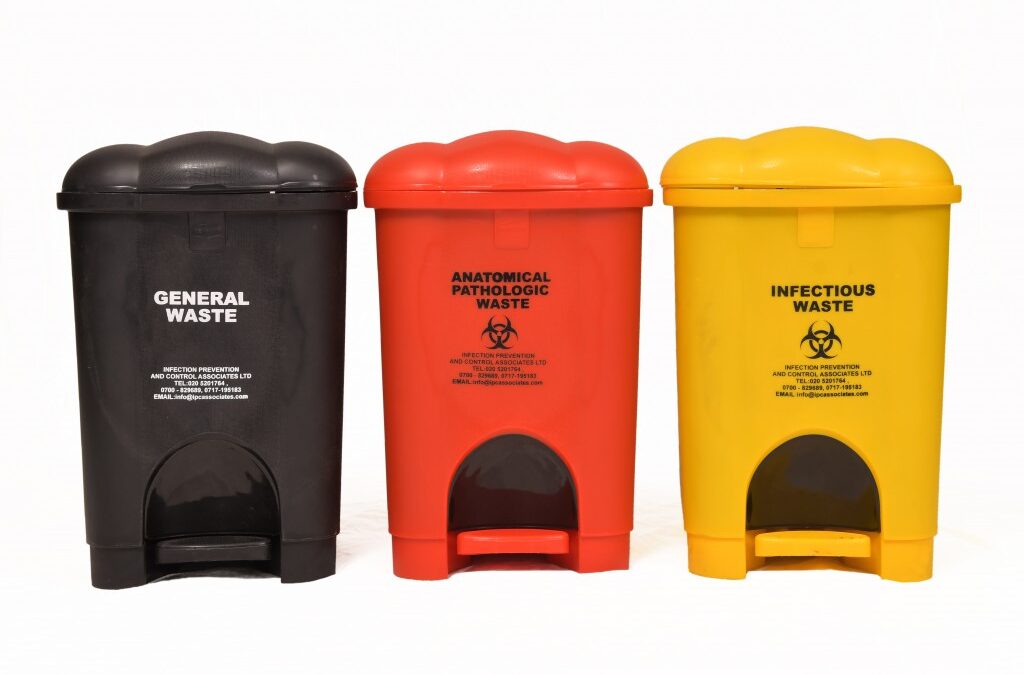
Immediately separate pharmaceutical waste from other medical or general waste. The rules require waste to be segregated by category—especially cytotoxic waste and aerosol containers. Use colour-coded, clearly labelled containers and ensure nobody mixes wastes.
3. Packaging and Labelling
Place pharmaceutical waste in leak-proof, tamper-proof containers. Labels must state the contents, the generator’s details, and warnings. The rules specify both English and Kiswahili labelling.
The Kenyan Law also states that pharmaceutical companies should avoid bundling incompatible wastes in the same package.
4. Storage
Store waste in a designated, secure quarantine area clearly marked “PHARMACEUTICAL WASTE AREA.” The area must be locked, access controlled and away from usable stock. Aim to dispose within one year of generation unless other approved arrangements exist.
5. Transportation
Move pharmaceutical waste only via licensed carriers. Vehicles must prevent leakage or spillage, display hazard markings and carry tracking notes. For cross-border transit or export, prior informed consent from the National Environment Management Authority (NEMA) is mandatory.
6. Treatment & Disposal
Approved disposal methods include incineration at high temperatures (especially for cytotoxic waste), encapsulation, inertisation or return to manufacturer. The rules provide a schedule for small versus large quantities.
7. Recording & Reporting
Maintain detailed records: date, product trade name, active ingredient, dosage form, quantity and justification for disposal. This supports traceability and compliance auditing.
Best Practices for Health-Facilities & Pharmacies
-
Integrate waste-management training into staff onboarding and refresher sessions.
-
Audit your stock regularly to identify short-dated items and avoid unnecessary waste.
-
Use return-to-supplier mechanisms where possible.
-
Partner only with licensed waste-handling and disposal contractors.
-
Label and segregate clearly from the point of generation—reduce risk of contamination.
-
Perform routine inspections of the quarantine waste-area and verify the disposal certificates.
By embedding these practices, you ensure operational safety and regulatory compliance.
Challenges & How to Overcome Them
Many Kenyan facilities face challenges: limited awareness, contract management issues, small-volume disposal costs, and lack of training. Research in Nairobi pharmacies showed significant gaps in handling and disposal practices.
To overcome these, management must make waste-handling integral to facility operations: allocate budget, appoint a waste-manager, schedule regular reviews and engage external advisors when needed.
Role of Clarity Pharma Consultancy
At Clarity Pharma Consultancy, we support healthcare providers, pharmaceutical companies and regulatory stakeholders to navigate Kenya’s pharmaceutical-waste requirements. We provide:
-
Waste-management training programmes
-
Compliance audits and gap-analysis reports
-
Contract-review for disposal service providers
-
Support in applying for PPB/NEMA licenses and disposal-certificates
If you need expert guidance, contact us to ensure your waste-management system is robust, compliant and industry-best.
Safe pharmaceutical waste management in Kenya is no longer optional—it is a regulatory, ethical and operational imperative.
By following a structured process—from minimisation, segregation, packaging, storage and transport to tratamento and disposal—you protect your team, patients and environment. Strong record-keeping and ongoing training make compliance manageable.
FAQs
by Mr. Maroa Noa | Nov 18, 2025 | Legal, Operations, Risk Management
Counterfeiting remains one of the biggest threats to Kenyan businesses. Fake goods undermine innovation, erode consumer trust, and can even endanger public health.
Recognizing this, the Kenya Industrial Property Institute (KIPI) has stepped up its anti-counterfeit efforts through strategic partnerships, legal tools, and public education.
This article explains how KIPI is strengthening anti‑counterfeiting measures and why this matters for Kenyan innovators, MSMEs, and the economy at large.
Why Counterfeiting Is a Major Concern in Kenya
-
Counterfeit trade costs Kenya an estimated KSh 153 billion annually, according to the Anti‑Counterfeit Authority (ACA).
-
The head of ACA also warns that fake goods, especially medicines, present a serious public health risk.
-
Globally, intellectual property theft and counterfeiting are valued at over USD 500 billion, with about 30% of counterfeits now sold online — making the challenge more urgent.
In response, KIPI has reinforced its role in intellectual property (IP) enforcement.
KIPI’s Strategic Collaboration with the Anti‑Counterfeit Authority (ACA)
KIPI is working hand-in-hand with the Anti‑Counterfeit Authority (ACA) to drive a robust, multi-layered strategy against IP theft.
Key pillars of this collaboration include:
-
Public Outreach and Training
Together, KIPI and ACA run campaigns to educate consumers about the dangers of counterfeit goods.
-
IP Rights Recordation
KIPI encourages IP owners to record their rights (like trademarks, patents, designs) with the ACA.
-
This recordation system helps customs and border enforcement detect and intercept counterfeit goods at import points.
-
Since January 2023, importing goods bearing unrecorded IP rights is punishable under Kenyan law.
-
Enforcement Support
-
KIPI provides critical evidence in legal cases by supplying certificates of trademarks, patents, designs, and utility models.
-
These certificates strengthen court prosecutions against counterfeiters.
Strengthening the Enforcement Ecosystem
KIPI’s anti‑counterfeit approach is not limited to awareness. It actively supports enforcement through inter-agency cooperation:
Raising Awareness During World Anti‑Counterfeit Day
Each year during World Anti‑Counterfeit Day, KIPI plays a lead role in public events aimed at raising awareness.
-
In 2025, the World Intellectual Property Organization (WIPO) Director-General visited Kenya, calling on Kenyans to be vigilant about illicit trade.
-
KIPI’s board chairman, Allan Kosgey, emphasized the economic and health risks posed by counterfeits and reaffirmed KIPI’s commitment to enforcement.
Legal and Regulatory Tools Backing KIPI’s Efforts
KIPI’s anti-counterfeit work rests on a strong legal foundation:
-
The Anti‑Counterfeit Act (2008) prohibits the importation and trade of unrecorded IP-protected goods.
-
Under this law, failure to declare IPRs or importing goods with unrecorded rights can lead to severe fines.
-
Also, in 2024, Kenya released a major enforcement report via the ISIPPE‑2 International Symposium, highlighting improved institutional cooperation and stronger consumer protections.
Why These Measures Matter for Kenyan Innovators and Businesses
KIPI’s strengthened anti-counterfeit actions deliver real benefits to Kenyan economic actors:
-
Innovators and MSMEs can operate with confidence, knowing their IP is enforced and protected.
-
Consumers gain better protection from dangerous fake products, especially in sectors like pharmaceuticals.
-
Investors gain trust in Kenya’s IP regime and are more likely to back local brands.
-
Local industry can scale without unfair competition from counterfeit imports.
Challenges and the Road Ahead
Despite progress, KIPI’s anti-counterfeit mission still faces obstacles:
-
Low IP awareness: Many small businesses remain unaware of the recordation process.
-
Resource constraints: Enforcement agencies may lack sufficient manpower or funding.
-
Online counterfeits: As more counterfeiting happens on digital platforms, detection becomes more complex.
-
Governance tensions: Recent reports suggest internal governance issues at KIPI, which could undermine public trust.
How Kenyan Businesses Can Leverage KIPI’s Anti‑Counterfeit Framework
Here are practical steps for businesses and innovators to benefit from KIPI’s strengthened IP enforcement:
-
Record Your IP Rights with the ACA via KIPI to ensure border protection.
-
Register Your Trademark, Patent or Design early to build a legal shield.
-
Engage in KIPI-ACA Training to understand how to use anti-counterfeit tools.
-
Monitor Imports and Distributors: Use recordation data to flag potential counterfeit risks.
-
Collaborate on IP Enforcement: Report suspected counterfeits to KIPI and ACA for action.
Counterfeiting threatens Kenya’s innovation ecosystem, consumer safety, and economic growth.
By deepening its anti‑counterfeit measures, KIPI is making a meaningful stand — working with ACA, the police, customs, and other agencies to protect IP rights. These efforts not only defend Kenyan businesses but also strengthen public trust and attract investment.
If you’re an innovator or entrepreneur looking to protect your brand, reach out to Clarity Pharma Consultancy.
We provide expert guidance on IP registration, recordation, and enforcement strategies tailored to Kenya’s legal landscape — so you can build your business with confidence.
FAQs

by Mr. Maroa Noa | Nov 18, 2025 | Legal, Operations, Strategy
Kenya’s Big Four Agenda — focused on manufacturing, universal healthcare, affordable housing, and food security — sets the stage for transformational growth.
At the heart of achieving these goals lies innovation. The Kenya Industrial Property Institute (KIPI) plays a fundamental role by protecting intellectual property (IP), encouraging industrial innovation, and helping local inventors scale. Through its strategic mandate, KIPI strengthens Kenya’s ability to meet its Big Four ambitions.
This article explores how KIPI actively supports each of the Big Four pillars, why its role matters, and how businesses and innovators can tap into its resources.
Understanding Kenya’s Big Four Agenda and Innovation
The Big Four Agenda is Kenya’s development roadmap to improve living standards through four key pillars: manufacturing, healthcare, housing, and food security.
Innovation underpins this agenda. Without new technologies, better processes, and creative solutions, it becomes difficult to increase manufacturing capacity, provide affordable health services, build sustainable housing, or scale agricultural productivity.
KIPI, as Kenya’s industrial property office, ensures that innovators’ ideas are protected so they can contribute meaningfully to national development.
KIPI’s Mission and Its Alignment with National Development
KIPI’s vision is “fostering global innovation and creativity for sustainable development.”
Its mission involves promoting inventiveness by protecting industrial property rights.
These goals align closely with Kenya’s broader economic strategies. For instance, KIPI’s strategic plan (2023–2027) explicitly supports value addition, MSMEs, and innovation as key enablers of national transformation.
By registering patents, industrial designs, and utility models, KIPI helps innovators secure their assets. It also oversees technology‐transfer agreements, enabling local industries to adopt and commercialize new technology.
How KIPI Supports the Big Four Pillars
1. Boosting Manufacturing with IP Protection and Technology Transfer
Manufacturing is central to Kenya’s Big Four Agenda. KIPI encourages value addition by enabling local manufacturers to innovate and protect their competitive advantage.
Through its IP registration services, KIPI helps local producers patent their inventions or protect industrial designs. This not only strengthens local manufacturing but also attracts partnerships and investment. In addition, by screening and facilitating technology-transfer agreements, KIPI enables companies to license or acquire critical technologies from research institutions.
At the Kakamega Investments Conference, KIPI emphasized the importance of IP protection for county-level innovators and manufacturers. By safeguarding their ideas, small producers can receive funding, scale operations, and differentiate their products.
2. Enabling Universal Healthcare Through Innovation
Health innovation requires new ideas, from medical devices to pharmaceutical formulations. KIPI supports health-related inventors by protecting their IP, making innovation viable and investable.
In the larger picture, protected medical inventions can attract funding, facilitate partnerships, and be licensed to local or global manufacturers — thus improving access to affordable healthcare.
KIPI’s work ensures that inventors in the healthcare sector get legal protection for their solutions, which encourages innovation tailored to Kenya’s health needs.
3. Driving Affordable Housing Through Creative Design and Technology
Affordable housing is not just about bricks and mortar: it involves creative construction methods, modular housing solutions, and cost‑efficient materials.
Innovators working on novel building technologies, design techniques, or efficient construction materials benefit from KIPI’s design registration services.
By protecting industrial designs, KIPI gives architects, engineers, and construction innovators the confidence to develop and commercialize new housing solutions.
Consequently, the housing market can benefit from sustainable innovation, lowering costs while preserving quality.
4. Enhancing Food Security via Agricultural Innovation
Agriculture drives food security and economic development in Kenya. KIPI ensures that inventors in agritech — such as those working on better storage systems, seed varieties, or precision farming tools — can protect their inventions.
Protected IP fosters trust among investors and agro‑industries. These stakeholders are more likely to adopt or fund new technologies when they see their intellectual property safeguarded.
By supporting innovation in food storage, crop technology, and post-harvest systems, KIPI contributes directly to the Big Four goal of food security.
Key Initiatives that Strengthen KIPI’s Support
Technology and Innovation Support Center at Konza Technopolis
KIPI signed an MoU with Konza Technopolis to establish a Technology and Innovation Support Center (TISC).
This center offers advisory services on patenting, trademarks, commercialization, and licensing. Startups and SMEs can access these services free of charge.
It also links innovators with investors and industry partners, making it easier to bring new technologies to market.
Inventor Assistance Program (IAP)
In partnership with WIPO, KIPI launched the Inventor Assistance Program in May 2023.
The program matches inventors with volunteer patent attorneys to help them navigate IP processes.
By doing this, KIPI ensures that resource‑constrained innovators — including those in health, agriculture, or housing — can protect their ideas and drive meaningful impact.
IP Education and Outreach
KIPI works to build IP awareness across all levels. It targets schools to introduce intellectual property education early.
By educating youth, KIPI nurtures a culture of creativity that supports Kenya’s long-term innovation ecosystem — a critical enabler of the Big Four.
Challenges and How KIPI Is Addressing Them
Despite its vital role, KIPI faces several challenges:
-
Limited IP awareness: Many MSMEs and inventors still do not fully understand IP benefits.
-
Resource constraints: The cost of filing, registration, and enforcement can be high.
-
Complex legal and technical processes: Innovators often require expert help to draft patents, negotiate licenses, or commercialize.
-
Scaling technology uptake: Bridging the gap between invention and mass adoption remains difficult.
To address these obstacles, KIPI leverages partnerships (like with WIPO), expands training, and strengthens its internal systems for faster, more accessible services.
The Konza TISC and IAP are part of its strategy to democratize IP support and enable national development through innovation.
How Innovators and Businesses Can Leverage KIPI for the Big Four
-
Evaluate your innovation’s IP potential — Conduct an IP audit to identify what can be protected (patents, designs, etc.).
-
Join the Inventor Assistance Program (IAP) — Get pro bono legal support to file a patent, especially if your technology applies to healthcare, food security, or construction.
-
Use the Konza TISC — Leverage advisory services, training, and funding linkages to commercialize your innovation.
-
Build an IP-focused business strategy — Incorporate licensing, collaboration, or value‑addition early in your business model.
-
Engage in IP capacity building — Attend KIPI workshops, join IP-awareness campaigns, or partner with research institutions to strengthen your IP knowledge.
KIPI plays a strategic role in realizing Kenya’s Big Four Agenda. By protecting innovation, facilitating technology transfer, and building IP awareness, it helps innovators contribute to manufacturing, health, housing, and agriculture in sustainable and scalable ways.
If you are a startup, inventor, or enterprise working on solutions for Kenya’s big development challenges, Clarity Pharma Consultancy can support you. We offer expert guidance on IP strategy, KIPI processes, and innovation commercialization tailored to the Big Four sectors. Contact us today to explore how your ideas can power Kenya’s future.
FAQs