
by Mr. Maroa Noa | Nov 19, 2025 | Legal Framework, Operations, Risk Management, Strategy
What is GMP and Why Does It Matter?
Good Manufacturing Practices (GMP) are internationally recognized principles that ensure pharmaceutical products are consistently produced and controlled according to quality standards.
In Kenya, GMP regulations are enforced by the Pharmacy and Poisons Board (PPB) to guarantee the safety, efficacy, and quality of medicines distributed across the country.
For both pharmaceutical manufacturers and community-level dispensaries, adhering to GMP guidelines is not optional—it’s a fundamental obligation.
In this article, we’ll explore Kenya’s GMP framework, compliance requirements, and practical strategies to maintain GMP standards across pharmaceutical operations.
Understanding the GMP Regulatory Framework in Kenya
GMP in Kenya is regulated under the Pharmacy and Poisons Act (Cap 244) and various PPB-issued guidelines.
The PPB, in collaboration with international agencies like the WHO, has adopted and localized GMP standards to suit the Kenyan pharmaceutical context. These standards apply to:
- Drug manufacturers
- Importers and exporters
- Warehouses and distributors
- Contract manufacturing and packaging facilities
GMP inspections are routinely conducted to assess compliance, and failure to meet the requirements can lead to suspension of operations or product recalls.
Key Pillars of Good Manufacturing Practices
1. Quality Management Systems (QMS)
A quality management system (QMS) is a structured framework that defines and documents an organization’s processes, procedures, and responsibilities for achieving quality policies, practices, and objectives.
The goal of a QMS is to reduce waste, increase efficiency, and improve customer satisfaction. A strong QMS is the backbone of GMP compliance. It includes:
2. Personnel and Training
Every employee involved in manufacturing must be:
- Trained on GMP requirements
- Competent in their specific tasks
- Regularly evaluated for performance and knowledge
The PPB emphasizes that all staff should understand hygiene practices, documentation standards, and contamination prevention techniques.
3. Premises and Equipment
Facilities must be constructed to minimize contamination. Requirements include:
- Smooth, easy-to-clean surfaces
- Controlled airflow and temperature
- Segregated zones for different processes
- Validated and calibrated equipment
This ensures that both raw materials and finished products are protected from physical, chemical, or microbial hazards.
4. Documentation and Record-Keeping
“If it’s not documented, it didn’t happen”—this GMP mantra highlights the importance of good record-keeping. Essential documents include:
- Batch manufacturing records
- Equipment logs
- Cleaning schedules
- Deviation reports
- Stability testing data
Digital documentation systems are increasingly being adopted in Kenya for enhanced traceability and data integrity.
5. Raw Material Control
All raw materials must be:
- Sourced from approved suppliers
- Tested for identity, purity, and quality
- Properly labeled and stored
The PPB requires full traceability for every input used in the manufacturing process.
Common GMP Violations in Kenyan Pharmacies and Manufacturers
Non-compliance with GMP can lead to serious consequences. Common violations observed by the PPB include:
- Inadequate or missing documentation
- Cross-contamination due to poor layout
- Untrained staff handling sensitive tasks
- Failure to conduct quality testing on finished products
- Expired materials used in manufacturing
These lapses not only risk public health but also damage brand reputation and can lead to legal action or operational suspension.
GMP Inspection and Certification Process in Kenya
Here is how the process typically works in Kenya:
Step 1: Preparation and Application
The manufacturer completes the application form (via the PPB online portal) and submits required documents.
After submission, PPB issues an invoice and payment must be settled.
Step 2: Scheduling the Inspection
Once documentation is in order, PPB arranges a site inspection. The inspection covers manufacturing premises, equipment, processes, personnel competence, documentation, quality control and more.
Step 3: On-site Inspection
Inspectors evaluate the site against criteria in the GMP guidelines: site design and cleanliness, process controls, documentation, product quality systems, storage, personnel training, etc.
If there are discrepancies, inspectors raise observations and may require corrective actions (CAPAs).
Step 4: Report and Corrective Actions
After the inspection, PPB issues an inspection report, highlighting non-compliance issues if any. The manufacturer must respond with corrective actions and implement them within a set timeframe.
Step 5: Certification / Approval
If the manufacturer meets the GMP requirements and resolves any major issues, PPB issues a GMP certificate or approval.
The certificate may be required for regulatory approvals, export permissions, etc.
Step 6: Ongoing Compliance & Surveillance
GMP certification is not a one-off event. PPB conducts surveillance inspections periodically to ensure continued compliance. Manufacturers must maintain standards, update SOPs, train staff and audit internal systems.
Benefits of GMP Compliance for Kenyan Pharmaceutical Businesses
Complying with GMP brings a host of advantages, including:
- Regulatory Approval: Facilitates PPB licensing, registration, and product marketing
- Market Trust: Builds consumer and healthcare provider confidence
- Reduced Recalls: Minimizes the risk of product failure or public health hazards
- Operational Efficiency: Standardized procedures lead to fewer errors and better outcomes
- Global Opportunities: GMP certification opens the door to regional and international markets
Digital Transformation in GMP Compliance
The PPB is encouraging the adoption of digital tools to improve GMP compliance. Key innovations include:
- Electronic Batch Records (EBR): Reduce errors and improve audit readiness
- Digital Quality Management Systems: For real-time tracking of SOPs and deviations
- Mobile Training Modules: To ensure staff are consistently educated on best practices
- Environmental Monitoring Systems: Automated systems to monitor temperature, humidity, and air quality in real-time
Digital solutions not only streamline compliance but also offer cost savings and scalability for growing pharmaceutical businesses.
Challenges to GMP Compliance in Kenya
Despite clear guidelines, some facilities struggle due to:
- High costs of facility upgrades
- Limited access to trained GMP consultants
- Resistance to documentation and SOP adherence
- Inconsistent enforcement across counties
To address these challenges, the PPB collaborates with training institutions and donor partners to offer workshops, audits, and financial support to manufacturers.
A Foundation for Safe and Quality Medicines
Good Manufacturing Practices are the cornerstone of pharmaceutical safety and quality assurance.
In Kenya, adherence to GMP ensures that patients receive safe, effective, and high-quality medicines, while pharmaceutical businesses maintain compliance, credibility, and competitiveness.
With increasing regulatory oversight and digital innovation, Kenyan pharmacies and manufacturers are better equipped than ever to implement GMP successfully.
By investing in quality systems, training, and facility upgrades, every stakeholder in the pharmaceutical supply chain can contribute to a healthier, more trustworthy healthcare system.
FAQs
by Mr. Maroa Noa | Nov 19, 2025 | Legal, Legal Framework, Operations
Safe management of pharmaceutical waste matters now more than ever. It protects public health, safeguards the environment, and ensures compliance with Kenyan law.
Every healthcare facility, pharmacy and pharmaceutical manufacturer in Kenya must treat pharmaceutical waste responsibly. Improper disposal can lead to environmental contamination, public health hazards and legal consequences.
The regulatory framework now clearly defines how pharmaceutical waste must be handled. This article will walk you through what you need to know and what you need to do.
In this guide, you will learn regulatory requirements, best practices, and practical steps.
Understanding the Regulatory Framework in Kenya
Kenya’s laws now provide clear rules for pharmaceutical waste management. The Pharmacy and Poisons Board (PPB) released guidelines for safe management of pharmaceutical waste in 2025.
Meanwhile, the Pharmacy and Poisons (Pharmaceutical Waste Management) Rules, 2022 under Legal Notice No. 99 of 2022 sets out detailed obligations for waste generators.
These rules apply to expired, damaged or unwanted pharmaceuticals, and any materials contaminated by them. They do not apply to sharps, general healthcare waste or radioactive waste.
Why Safe Pharmaceutical Waste Management Matters
Pharmaceutical waste can contain active ingredients that harm people and ecosystems. When such waste enters water systems or landfills unchecked, it poses risks to human health and biodiversity. Additionally, failing to comply with regulations can bring costly penalties and reputational damage.
Furthermore, pharmaceutical loss—or failure to destroy unusable stock—represents wasted resources. Good waste management therefore supports sustainability and cost-efficiency.
Key Steps in the Waste Management Process
1. Waste Minimisation
Begin by reducing the amount of waste your facility generates. The rules emphasise measures such as checking expiry dates on delivery, refusing short-dated pharmaceuticals and maintaining a First Expiry, First Out (FEFO) system. This step lowers your disposal burden and costs.
2. Segregation at Source
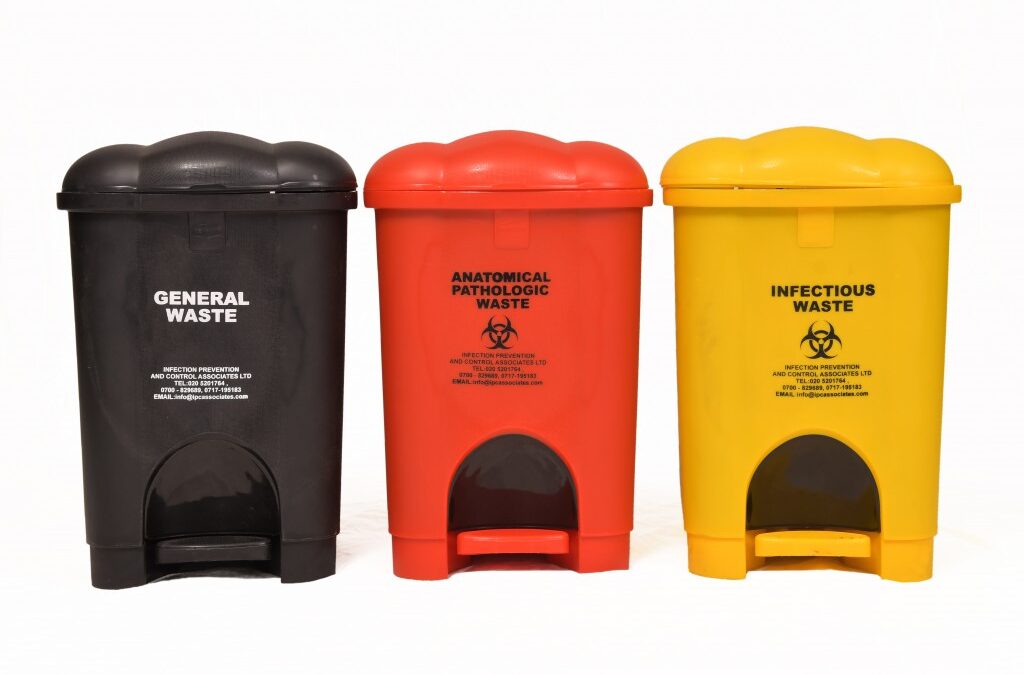
Immediately separate pharmaceutical waste from other medical or general waste. The rules require waste to be segregated by category—especially cytotoxic waste and aerosol containers. Use colour-coded, clearly labelled containers and ensure nobody mixes wastes.
3. Packaging and Labelling
Place pharmaceutical waste in leak-proof, tamper-proof containers. Labels must state the contents, the generator’s details, and warnings. The rules specify both English and Kiswahili labelling.
The Kenyan Law also states that pharmaceutical companies should avoid bundling incompatible wastes in the same package.
4. Storage
Store waste in a designated, secure quarantine area clearly marked “PHARMACEUTICAL WASTE AREA.” The area must be locked, access controlled and away from usable stock. Aim to dispose within one year of generation unless other approved arrangements exist.
5. Transportation
Move pharmaceutical waste only via licensed carriers. Vehicles must prevent leakage or spillage, display hazard markings and carry tracking notes. For cross-border transit or export, prior informed consent from the National Environment Management Authority (NEMA) is mandatory.
6. Treatment & Disposal
Approved disposal methods include incineration at high temperatures (especially for cytotoxic waste), encapsulation, inertisation or return to manufacturer. The rules provide a schedule for small versus large quantities.
7. Recording & Reporting
Maintain detailed records: date, product trade name, active ingredient, dosage form, quantity and justification for disposal. This supports traceability and compliance auditing.
Best Practices for Health-Facilities & Pharmacies
-
Integrate waste-management training into staff onboarding and refresher sessions.
-
Audit your stock regularly to identify short-dated items and avoid unnecessary waste.
-
Use return-to-supplier mechanisms where possible.
-
Partner only with licensed waste-handling and disposal contractors.
-
Label and segregate clearly from the point of generation—reduce risk of contamination.
-
Perform routine inspections of the quarantine waste-area and verify the disposal certificates.
By embedding these practices, you ensure operational safety and regulatory compliance.
Challenges & How to Overcome Them
Many Kenyan facilities face challenges: limited awareness, contract management issues, small-volume disposal costs, and lack of training. Research in Nairobi pharmacies showed significant gaps in handling and disposal practices.
To overcome these, management must make waste-handling integral to facility operations: allocate budget, appoint a waste-manager, schedule regular reviews and engage external advisors when needed.
Role of Clarity Pharma Consultancy
At Clarity Pharma Consultancy, we support healthcare providers, pharmaceutical companies and regulatory stakeholders to navigate Kenya’s pharmaceutical-waste requirements. We provide:
-
Waste-management training programmes
-
Compliance audits and gap-analysis reports
-
Contract-review for disposal service providers
-
Support in applying for PPB/NEMA licenses and disposal-certificates
If you need expert guidance, contact us to ensure your waste-management system is robust, compliant and industry-best.
Safe pharmaceutical waste management in Kenya is no longer optional—it is a regulatory, ethical and operational imperative.
By following a structured process—from minimisation, segregation, packaging, storage and transport to tratamento and disposal—you protect your team, patients and environment. Strong record-keeping and ongoing training make compliance manageable.
FAQs

by Mr. Maroa Noa | Nov 18, 2025 | Legal Framework, Operations, Strategy
Kenya is entering a new phase of innovation. As technology evolves and entrepreneurship continues to expand, the legal structures guiding intellectual property (IP) protection must evolve as well.
The Kenya Industrial Property Institute (KIPI) has initiated reforms to the Industrial Property Acts to strengthen governance, support emerging technologies, and create an environment where innovation can thrive.
These reforms carry significant potential. They can streamline IP processes, encourage investor confidence, boost SME competitiveness, and position Kenya as a regional innovation leader.
What KIPI Does: A Quick Overview
The Kenya Industrial Property Institute (KIPI) is a state corporation under the Ministry of Investments, Trade, and Industry.
Its core mandate includes:
-
Registering and managing industrial property rights (patents, designs, utility models, trademarks)
-
Reviewing and screening technology‑transfer agreements.
-
Supplying industrial property information to the public.
-
Promoting inventiveness through training, competitions and public outreach.
KIPI also published a Strategic Plan (2023‑2027) that prioritizes modernization, innovation support, and better service delivery.
Reforming the Acts would give legal backing to this strategic vision.
Key Areas for Reform
Here are some of the most promising reform areas that could reshape Kenya’s IP landscape for the better:
1. Modernizing Patent Law
-
Introduce clearer guidelines for evaluating high‑tech inventions (biotech, AI, digital tools).
-
Strengthen KIPI’s technical capacity to examine complex applications.
-
Speed up examination and reduce backlogs so innovators get protection more quickly.
2. Strengthening Utility Model and Design Protection
-
Simplify registration processes for small inventors and designers.
-
Provide stronger protection and enforcement for industrial designs.
-
Lower costs or administrative barriers that currently discourage SMEs from applying.
3. Digitization and E-Government Systems
-
Fully digitize IP applications, renewals, and record-keeping.
-
Integrate KIPI’s systems with regional IP bodies to ease cross-border registration.
-
Use data analytics to monitor trends and improve responsiveness.
4. Regulating Emerging Technologies
-
Clarify patentability of AI-generated inventions, plant varieties and software-related innovations.
-
Define ownership rules for jointly created technologies and licensed works.
-
Create flexible provisions that can evolve with new technological breakthroughs.
5. Improving Enforcement and Dispute Resolution
-
Introduce tougher penalties for IP infringement, counterfeiting, and piracy.
-
Facilitate faster dispute resolution mechanisms through specialist IP tribunals.
-
Strengthen collaboration with the Anti‑Counterfeit Authority and KEBS.
How Reform Could Transform Kenya’s Innovation Ecosystem
Reforming the Industrial Property Acts via KIPI can deliver several long-term benefits:
-
Increased Investor Confidence
Clear and modern IP laws attract both local and foreign investors. They reassure innovators that their work is legally protected.
-
Empowered SMEs and Start‑ups
Simpler, fairer IP tools mean smaller players can secure and monetize their innovations more effectively.
-
Boost to Research & Academia
Academic institutions can better protect inventions and transfer them to industry, fueling research commercialization.
-
Growth in Creative and Manufacturing Industries
Stronger design protection unlocks value in Kenya’s growing creative economy—fashion, furniture, consumer goods and more.
-
Alignment with Global Standards
By updating its legal framework, Kenya aligns more closely with global IP bodies like WIPO. This makes cross-border partnerships easier.
Challenges to Watch
While reform is promising, it also comes with risks and obstacles:
-
Political resistance or governance challenges might slow down the process.
-
Legal reform requires financing – both for updating the law and building KIPI’s capacity.
-
Innovators may lack awareness of new rights or how to use them.
-
Enforcement mechanisms will need strengthening to be effective.
-
There could be transitional issues – existing filings or rights may need retroactive coverage.
What Innovation Stakeholders Should Do Now
If you are a business owner, inventor, or entrepreneur, here’s what you can do to prepare:
-
Conduct an IP Audit
Map your inventions, designs, and brand assets. Know what you own and what you might protect.
-
Register Early
File patent, trademark, or design applications now. Reforms may change rules or timelines.
-
Stay Informed
Follow updates on KIPI’s public consultations, draft Bills, or policy strategies.
-
Partner With Experts
Intellectual property law can be complex. Work with consultants, lawyers, or IP strategists.
-
Advocate for Reform
Engage in policy conversations. Support organizations pushing for better IP frameworks.
How Clarity Pharma Consultancy Can Help
As Kenya’s IP landscape evolves, you need trusted guidance. Clarity Pharma Consultancy offers:
-
Strategic IP advisory tailored to inventors and businesses
-
Support with patent, utility model, trademark and design registration
-
Help navigating technology transfer and licensing agreements
-
Enforcement strategy and risk management in IP
-
Training for teams and innovators on IP best practices
If you want to safeguard your innovation and get ready for the next wave of legal reform, talk to Clarity Pharma Consultancy today.
Conclusion
Reforming the Industrial Property Acts offers Kenya a strong opportunity to strengthen its innovation ecosystem. Updated laws will make IP protection more efficient, more predictable, and more aligned with global trends.
Innovators, SMEs, research institutions, and corporates stand to benefit from clear and modern legal frameworks. As Kenya prepares for a more dynamic innovation future, strong policies will play a central role in driving creativity, investment, and long-term competitiveness.
FAQs

by Mr. Maroa Noa | Nov 18, 2025 | Legal Framework, Marketing, Risk Management
Innovation powers growth in Kenya. At the heart of that growth lies intellectual property (IP). The Kenya Industrial Property Institute (KIPI) collects data that reveal how active Kenya is in patenting, branding and design.
In this article, we explore that data, draw insights and show how businesses, entrepreneurs and creators can act.
What is KIPI and what does it do?
KIPI oversees industrial property rights in Kenya. These rights include patents, industrial designs, utility models and trademarks.
According to its strategic plan, the Institute aims to facilitate registration of rights, promote inventiveness and support MSMEs.
By managing applications, registrations and information services, KIPI serves as a key player in Kenya’s innovation ecosystem.
The numbers at a glance – KIPI’s statistics
KIPI publishes IP statistics from 2000 to 2022.
Some highlights:
-
Patent applications from Kenyan residents rose from 41 in 2007 to over 3,600 by 2021.
-
Trademark applications show steady activity; for example, national applications reached 2,459 over the period.
-
Industrial design registrations by Kenyan residents climbed to 366 over the period.
These trends suggest greater awareness of IP protection among innovators and businesses.
Key trends in Kenya’s IP filings
Trademark registrations leading the way
Trademarks consistently dominate filings. Many businesses engage in branding before advanced research and development. This preference shows a strong culture of protecting names and marks.
Growing patent activity, but still gaps
Patent filings by Kenyan residents show growth, yet remain lower compared with more developed systems. According to one study, Kenya “has exhibited low levels of patenting over the years”. That signals room for local innovators to step up.
Rise in industrial design protection
Design registrations—covering visual features of products—have also increased. This trend aligns with Kenya’s growing creative and manufacturing sectors.
Local vs. foreign applicants
Data show a large share of filings from non-residents or international applicants via regional systems.
This means Kenyan innovators face both opportunity and competition.
What these statistics reveal about the innovation ecosystem
The numbers tell several stories:
-
Entrepreneurial awareness: Rising filings show that more Kenyan businesses recognise IP value.
-
Brand-centric growth: The high trademark numbers reflect strong focus on branding and market entry.
-
Innovation gap: Lower patent numbers indicate fewer locally originated inventions obtaining protection.
-
Global interconnectedness: Use of regional patent systems and foreign filings show Kenya’s linkage to international networks.
Drivers shaping Kenya’s IP landscape
Several forces influence these outcomes:
-
Government policy encouraging innovation and industrialisation.
-
Growth of start-up culture, especially in Nairobi and tech hubs.
-
Increased access to education, research institutions and innovation support.
-
Platforms like KIPI’s e-services making registration more accessible.
-
Demand for Kenyan brands and products domestically and internationally.
Challenges for IP uptake in Kenya
Despite positive trends, obstacles remain:
-
IP awareness among smaller enterprises remains low. A KIPI survey found 69% of respondents were business enterprises, yet many lacked registration
-
The gap between registration and commercialisation is large. One report noted only about 55% of registered industrial property rights are meaningfully commercialised
-
Institutional constraints such as staffing, capacity and automation hamper efficiency.
-
Costs, complexity and time delays can discourage applicants.
Why IP statistics matter for businesses and creators
When you understand IP statistics, you gain strategic insight. For example:
-
You can benchmark where Kenya stands in terms of innovation.
-
You can identify sectors showing growth (e.g., design registrations) and align your efforts accordingly.
-
You can inform your IP strategy: whether to focus on trademark, design or patent protection.
-
Policy makers and support agencies can allocate resources more effectively based on data.
How innovators and businesses can act now
-
Conduct an IP audit: identify what ideas, brands or designs you own or should protect.
-
For a start-up or MSME, register trademarks early to secure brand value.
-
For inventions, evaluate whether patenting is appropriate and file via KIPI.
-
Use industrial design registration when your product has distinctive appearance features.
-
Monitor KIPI’s statistics and reports to spot growth areas or gaps.
-
Consider commercialisation as part of your IP strategy—not just registration.
-
Engage experts when required—for example, to navigate technical or legal elements.
Kenya is advancing in its intellectual property journey. The data from KIPI reveal both promise and areas needing attention. For entrepreneurs, brands and innovators, the message is clear: safeguard your IP, align with growth sectors, and use the insights to compete.
If you require tailored IP strategy, registration support or commercialisation counselling, get in touch with Clarity Pharma Consultancy. Their team specialises in IP alignment, innovation readiness and strategic positioning in Kenya’s evolving ecosystem.
FAQs
by Mr. Maroa Noa | Nov 15, 2025 | Legal, Legal Framework, Operations
In Kenya, intellectual property protection is a vital tool for businesses and producer groups alike. While many are familiar with trademarks, fewer understand the concept of collective marks.
For associations, cooperatives, and producer groups, knowing the difference can unlock significant advantages. This article explains both concepts and offers guidance on their strategic use under Kenyan law.
What Is a Trademark?
A trademark, also known as a trade mark, is a sign used to distinguish goods or services of one enterprise from those of others.
According to the Kenya Industrial Property Institute (KIPI), a trade mark may consist of words, letters, numbers, designs, colours—or a combination of these—to serve as a distinctive identifier.
When you register a trademark, you secure exclusive rights to use that mark in connection with specified goods or services. This exclusivity helps prevent others from copying or infringing on your brand.
What Is a Collective Mark?
A collective mark (or collective trade mark) is different in its purpose and ownership. It is owned by an association, cooperative, or group rather than a single commercial business.
Members of this group may use the collective mark to indicate their membership, shared quality standards, or common origin.
Under Kenya’s Trade Marks Act (Cap. 506), applications for collective trade marks must be accompanied by a copy of the rules that govern their use.
These rules typically set out who may use the mark, under what conditions, and what quality or production standards must be met.
Key Differences: Collective Marks vs. Trademarks
Here are some of the main distinctions between a collective mark and a standard trademark:
| Feature |
Trademark |
Collective Mark |
| Ownership |
Owned by an individual or company. |
Owned by an association, cooperative, or group. |
| Use |
Used exclusively by the proprietor (or licensed others). |
Used by multiple members of the group under defined conditions. |
| Rules |
No formal “rules” required; the mark itself is protected. |
Must be accompanied by internal regulations governing use. |
| Purpose |
Distinguishes one business’s goods/services from those of others. |
Shows membership, quality, or origin (e.g., geographical origin). |
| Scope |
Exclusive right to prevent confusion, misuse. |
Collective branding; ensures consistency among members, but individual rights differ. |
Why Producer Groups in Kenya Should Consider Collective Marks
Producer groups—such as farmer cooperatives, artisan associations, or community enterprises—can particularly benefit from collective marks. Here are a few reasons why:
-
Shared Identity and Trust: A collective mark helps consumers recognize that products come from a regulated and trusted group.
-
Quality Assurance: By using membership rules, the group can enforce standards (e.g., on quality, origin, production methods), which enhances reputation.
-
Marketing Power: Smaller producers who might struggle individually can jointly build a stronger brand.
-
Geographical Indications (GIs): In Kenya, geographical names can be registered as collective marks, making this a useful tool for protecting products tied to a region.
-
Legal Protection: Registering the collective mark with KIPI gives the group defined rights, just like a trademark.
How to Register a Collective Mark in Kenya
Here are the steps that producer groups should follow to register a collective mark in Kenya:
-
Form an Association or Group: Ensure that the group (cooperative, society, or association) is legally constituted.
-
Draft Rules: Create clear regulations covering who can use the mark, how to use it, quality standards, and disciplinary measures.
-
Apply to KIPI: Submit a collective mark application to the Kenya Industrial Property Institute. The application must be designated as a collective mark.
-
Deposit Rules: Along with the application, deposit the group’s usage rules for KIPI’s review.
-
Advertise: KIPI will publish the trade mark in its Industrial Property Journal to allow for opposition.
-
Manage Use: Once registered, the group must enforce the rules, monitor members, and follow up on changes with KIPI.
Potential Challenges and Considerations
Producer groups should also be aware of some challenges when dealing with collective marks:
-
Governance: Maintaining fair and transparent internal rules is critical.
-
Compliance: Members must consistently meet the agreed quality standards.
-
Enforcement: If a member misuses the mark (or a non-member imitates it), the group must take action.
-
Costs: Legal preparation of rules, application fees, and follow-up may require funds and expertise.
-
Geographical Overlaps: If using a geographical name, conflicts may arise with other groups or existing intellectual property rights.
When Might a Regular Trademark Be Sufficient?
Although collective marks offer unique advantages, there are situations when a standard trademark may be more appropriate:
-
If a single producer or business wants exclusive brand identity, a personal or company trademark works best.
-
When the group does not yet have a formal association or does not wish to regulate membership or quality.
-
For small-scale or niche products, where creating and enforcing collective rules may be too resource-intensive.
-
When the aim is individual business expansion, with licensing opportunities outside the group.
Best Practices for Producer Groups
To maximise the benefits of collective marks, producer groups should:
-
Conduct capacity building to train members on quality standards.
-
Assign a management team to oversee use of the collective mark.
-
Monitor and audit members periodically.
-
Use the mark in marketing (e.g., packaging, labels) to build consumer recognition.
-
Review and update their internal rules as the group grows or evolves.
For producer groups in Kenya, a collective mark represents more than just legal protection—it is a powerful branding tool.
By leveraging collective identity, enforcing quality, and tapping into shared trust, associations can amplify their market presence.
When used alongside or instead of individual trademarks, collective marks help groups safeguard their reputation and build value.
FAQs
by Mr. Maroa Noa | Nov 15, 2025 | Law, Legal, Legal Framework
In Kenya, the world of patents is governed by the Industrial Property Act, which outlines clear standards for when an invention qualifies for protection.
Two of the most critical criteria under this Act are novelty and inventiveness (or inventive step). These concepts ensure that patents reward genuine innovation rather than ideas already known or obvious.
This article unpacks what they mean, why they matter, and how they operate under Kenyan law.
What Is Novelty in Kenyan Patent Law?
Legal Definition
Under Kenyan law, an invention is considered novel if it has not been anticipated by prior art. Prior art includes any information made available to the public — whether in writing, by use, exhibition, or in any non-written form — anywhere in the world, so long as it occurred before the patent application’s filing date or priority date.
Interestingly, the Act provides a limited grace period. Disclosures made within 12 months before the filing (or priority) date are not always disqualifying. But this only applies if the disclosure was made by the applicant (or their predecessor) or resulted from an obvious abuse by a third party.
What Does Inventiveness (Inventive Step) Mean?
Definition and Legal Standard
In Kenyan patent law, an invention must involve an inventive step — meaning it cannot be obvious to a “person skilled in the art,” given the existing state of the art. The standard requires more than just being different; the invention must represent a non-trivial leap over what is already known.
Applying the Standard
To assess whether an invention meets this criterion, examiners look at:
-
The state of the art (what was already publicly known).
-
Whether a skilled person, at the relevant date, would have logically combined or modified prior art in a way that leads to the invention.
-
Whether the claimed invention makes a technical contribution — such as an improved performance, a new effect, or unexpected advantage.
If an invention is novel but plainly follows what was already known, it may fail this test for inventiveness.
Why Novelty and Inventiveness Matter
These two criteria serve as gatekeepers to patent rights. They protect the public domain, ensuring that known ideas remain free, while rewarding real creativity and effort. Without novelty and inventiveness, the patent system might grant monopolies for trivial or already-known ideas — which would stifle competition and innovation.
Moreover, by demanding an inventive step, Kenya’s patent system encourages inventors to push boundaries, rather than making minor tweaks to existing solutions. This aligns with the purpose of the Industrial Property Act, which seeks to promote genuine innovation.
How These Criteria Are Examined in Practice
When an inventor files a patent application with the Kenya Industrial Property Institute (KIPI), the office conducts a substantive examination to test for novelty and inventiveness.
-
Novelty is assessed first: has the invention been made publicly available before?
-
If novelty is satisfied, the examiner then asks: would this invention have been obvious to a skilled person, having seen the prior art?
KIPI’s guidelines make this process systematic.
Challenges and Practical Tips for Kenyan Inventors
-
Prior Art Search Is Crucial
Before you apply, carry out a detailed search. Find out whether someone, somewhere, has already disclosed something similar — in published papers, patents, or even exhibitions.
-
Draft Claims Carefully
Draft your patent claims to emphasize what is unique and non-obvious. Highlight features that differentiate your invention from prior art.
-
Beware of Early Disclosure
If you publicly disclose your invention (for example, in a conference), keep in mind the 12-month grace period. Make sure your disclosure won’t invalidate your novelty claim.
-
Consult Experts
Engaging a patent attorney or agent experienced with KIPI and Kenyan patent law can help you navigate both the novelty and inventive step evaluations.
In Kenya, novelty and inventiveness are fundamental to securing a patent. Together, they ensure that only genuine, non-obvious, and socially valuable innovations receive protection.
Inventors should understand these concepts deeply, prepare carefully, and engage professional help where needed. By doing so, they can navigate the path to patent protection successfully — while contributing to Kenya’s innovation ecosystem.
FAQs