
by Mr. Maroa Noa | Nov 19, 2025 | Law, Operations, Strategy
Opening and running a pharmacy in Kenya demands more than a business idea—it requires strict compliance with regulatory standards. The Pharmacy and Poisons Board (PPB) sets clear rules for licensing pharmacy premises.
In this article, you will discover the steps, requirements, and best practices to stay on the right side of the law.
Understanding Pharmacy Premises Licensing in Kenya
Licensing a pharmacy premises means registering the physical facility where pharmaceutical business occurs.
The PPB mandates that any business dispensing medicines must operate from a licensed, inspected, and compliant premise under the law.By obtaining the correct licence, you safeguard public health and protect your business from penalties.
Why Compliance Matters in the Pharmaceutical Sector
Operating without the correct licence or in non-compliant premises can lead to fines, closure or prosecution. The law protects consumers by requiring safe premises, qualified staff, and proper processes.
Also, compliance builds trust with customers, regulators and partners—helping your pharmacy establish a strong reputation.
Key Requirements for Licensing a Pharmacy Premises in Kenya
Here are the major areas you must meet:
1. Premises Suitability
Your building must meet hygiene, ventilation, storage, and layout standards. For example: floors and walls need to be wash-able, the premises must protect medicines from heat and pests.
The space should be dedicated solely for the pharmacy business and not a mixture with non-related trade.
2. Superintendent Pharmacist Responsibility
A licensed pharmacist must supervise the operations. The PPB requires that the superintendent holds a valid practice licence.
Without a qualified professional, the application will likely be rejected.
3. Documentation and Application Process
You must submit forms, floor plans, business registration, the pharmacist’s credentials, and payment as prescribed in the guidelines.
Clear and complete documentation increases your chances of approval.
Step-by-Step Licensing Process in Kenya
Follow these steps to secure your licence:
Step 1: Business Registration
Register your business entity with the relevant registry (for example BRS Kenya). This gives your pharmacy a legal structure before applying to PPB.
Step 2: Appoint and Register the Superintendent Pharmacist
Ensure the pharmacist is registered and holds the required practice licence. The pharmacist must be named and approved by PPB.
Step 3: Apply for Premises Registration
Submit the “Application for Registration of Premises” (Form 4), plus required annexes and documentation.
Pay attention to the portal or manual process as specified by PPB.
Step 4: Inspection by PPB
After submission, the PPB will inspect the premises to verify compliance with standards. Inspection covers premises layout, storage conditions, and pharmacist presence.
Step 5: Licence Issuance
If your premises pass inspection, PPB issues the licence. Note: some licences expire 31st December of each year and require renewal.
PPB Inspection Checklist: What Inspectors Look For
During the inspection, expect the following focus areas:
-
Proper storage of pharmacy-only and over-the-counter drugs.
-
Security for controlled substances and poisons.
-
Licensed pharmacist on-site or evidence of supervision.
-
Floor, wall and ceiling surfaces that are easy to clean.
-
Documentation displayed: licence certificate, pharmacist’s credentials.
-
Good dispensing area layout with no crowding and clear workflow.
Common Mistakes That Lead to Non-Compliance
Avoid these pitfalls:
-
Operating without a licensed superintendent pharmacist.
-
Using premises that don’t meet structural or hygiene standards.
-
Failing to submit correct or complete documentation.
-
Mixing retail and wholesale activities in one premise without separate licences.
-
Late renewal of license or expiry of registration.
Penalties for Non-Compliance in Kenya
The law sets harsh consequences for unlicensed or non-compliant premises. Under the Pharmacy and Poisons Act Cap 244, offences can attract fines, imprisonment, or both.
Because of this, maintaining compliance is not optional—it is essential for sustainable business.
Renewal of Premises Licence
Most licences issued by PPB expire at the end of the calendar year (31 December). Applicants must apply each year to renew. Early renewal avoids late fees or business interruption.
Best Practices for Maintaining Compliance All Year Round
Here are practical steps you can implement:
-
Perform monthly internal audits of your operations and premises.
-
Keep the pharmacist’s credentials and licence displayed and up-to-date.
-
Maintain records of inspections, temperature logs, expiry checks.
-
Train staff on Good Pharmacy Practice and compliance culture.
-
Engage with a professional consultancy for regular compliance reviews.
If you need expert support, Clarity Pharma Consultancy offers tailored advisory services on licensing, inspections, regulatory updates and compliance strategy for Kenyan pharmacies.
Licensing your pharmacy premises in Kenya is a rigorous process—but with the right preparation, you can succeed and build a reputable, compliant business.
Adhering to PPB’s standards, maintaining a qualified superintendent pharmacist, meeting the premises requirements, and staying compliant year-on-year will set you up for success.
Start today, stay ahead of regulatory changes, and safeguard both your business and your community.
FAQs
by Mr. Maroa Noa | Nov 19, 2025 | Legal, Legal Framework, Operations
Safe management of pharmaceutical waste matters now more than ever. It protects public health, safeguards the environment, and ensures compliance with Kenyan law.
Every healthcare facility, pharmacy and pharmaceutical manufacturer in Kenya must treat pharmaceutical waste responsibly. Improper disposal can lead to environmental contamination, public health hazards and legal consequences.
The regulatory framework now clearly defines how pharmaceutical waste must be handled. This article will walk you through what you need to know and what you need to do.
In this guide, you will learn regulatory requirements, best practices, and practical steps.
Understanding the Regulatory Framework in Kenya
Kenya’s laws now provide clear rules for pharmaceutical waste management. The Pharmacy and Poisons Board (PPB) released guidelines for safe management of pharmaceutical waste in 2025.
Meanwhile, the Pharmacy and Poisons (Pharmaceutical Waste Management) Rules, 2022 under Legal Notice No. 99 of 2022 sets out detailed obligations for waste generators.
These rules apply to expired, damaged or unwanted pharmaceuticals, and any materials contaminated by them. They do not apply to sharps, general healthcare waste or radioactive waste.
Why Safe Pharmaceutical Waste Management Matters
Pharmaceutical waste can contain active ingredients that harm people and ecosystems. When such waste enters water systems or landfills unchecked, it poses risks to human health and biodiversity. Additionally, failing to comply with regulations can bring costly penalties and reputational damage.
Furthermore, pharmaceutical loss—or failure to destroy unusable stock—represents wasted resources. Good waste management therefore supports sustainability and cost-efficiency.
Key Steps in the Waste Management Process
1. Waste Minimisation
Begin by reducing the amount of waste your facility generates. The rules emphasise measures such as checking expiry dates on delivery, refusing short-dated pharmaceuticals and maintaining a First Expiry, First Out (FEFO) system. This step lowers your disposal burden and costs.
2. Segregation at Source
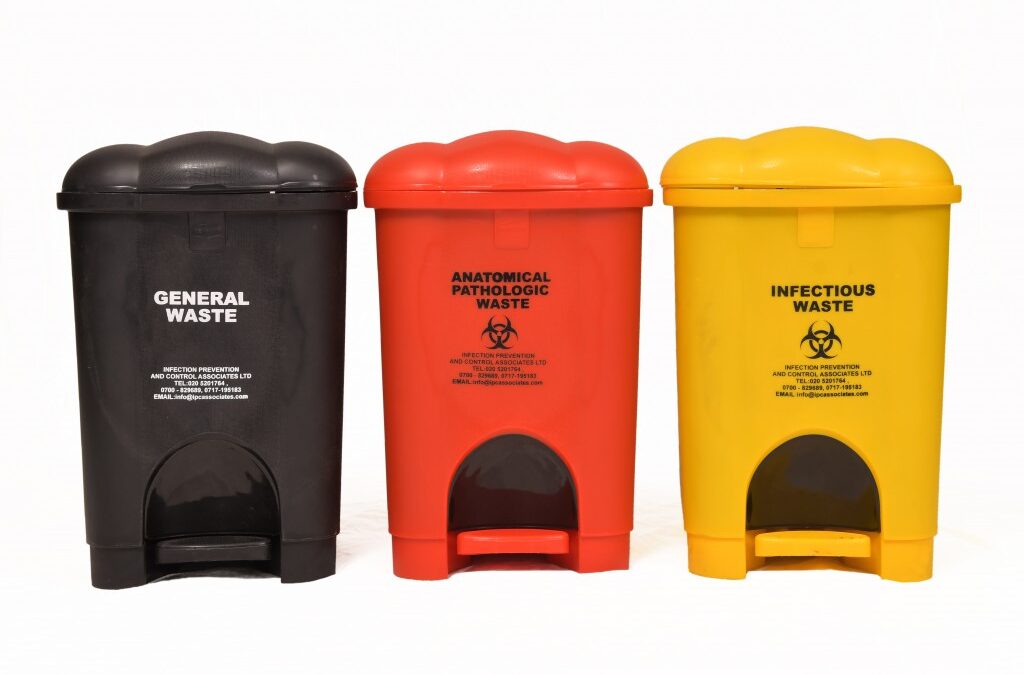
Immediately separate pharmaceutical waste from other medical or general waste. The rules require waste to be segregated by category—especially cytotoxic waste and aerosol containers. Use colour-coded, clearly labelled containers and ensure nobody mixes wastes.
3. Packaging and Labelling
Place pharmaceutical waste in leak-proof, tamper-proof containers. Labels must state the contents, the generator’s details, and warnings. The rules specify both English and Kiswahili labelling.
The Kenyan Law also states that pharmaceutical companies should avoid bundling incompatible wastes in the same package.
4. Storage
Store waste in a designated, secure quarantine area clearly marked “PHARMACEUTICAL WASTE AREA.” The area must be locked, access controlled and away from usable stock. Aim to dispose within one year of generation unless other approved arrangements exist.
5. Transportation
Move pharmaceutical waste only via licensed carriers. Vehicles must prevent leakage or spillage, display hazard markings and carry tracking notes. For cross-border transit or export, prior informed consent from the National Environment Management Authority (NEMA) is mandatory.
6. Treatment & Disposal
Approved disposal methods include incineration at high temperatures (especially for cytotoxic waste), encapsulation, inertisation or return to manufacturer. The rules provide a schedule for small versus large quantities.
7. Recording & Reporting
Maintain detailed records: date, product trade name, active ingredient, dosage form, quantity and justification for disposal. This supports traceability and compliance auditing.
Best Practices for Health-Facilities & Pharmacies
-
Integrate waste-management training into staff onboarding and refresher sessions.
-
Audit your stock regularly to identify short-dated items and avoid unnecessary waste.
-
Use return-to-supplier mechanisms where possible.
-
Partner only with licensed waste-handling and disposal contractors.
-
Label and segregate clearly from the point of generation—reduce risk of contamination.
-
Perform routine inspections of the quarantine waste-area and verify the disposal certificates.
By embedding these practices, you ensure operational safety and regulatory compliance.
Challenges & How to Overcome Them
Many Kenyan facilities face challenges: limited awareness, contract management issues, small-volume disposal costs, and lack of training. Research in Nairobi pharmacies showed significant gaps in handling and disposal practices.
To overcome these, management must make waste-handling integral to facility operations: allocate budget, appoint a waste-manager, schedule regular reviews and engage external advisors when needed.
Role of Clarity Pharma Consultancy
At Clarity Pharma Consultancy, we support healthcare providers, pharmaceutical companies and regulatory stakeholders to navigate Kenya’s pharmaceutical-waste requirements. We provide:
-
Waste-management training programmes
-
Compliance audits and gap-analysis reports
-
Contract-review for disposal service providers
-
Support in applying for PPB/NEMA licenses and disposal-certificates
If you need expert guidance, contact us to ensure your waste-management system is robust, compliant and industry-best.
Safe pharmaceutical waste management in Kenya is no longer optional—it is a regulatory, ethical and operational imperative.
By following a structured process—from minimisation, segregation, packaging, storage and transport to tratamento and disposal—you protect your team, patients and environment. Strong record-keeping and ongoing training make compliance manageable.
FAQs
by Mr. Maroa Noa | Nov 18, 2025 | Legal, Operations, Risk Management
Counterfeiting remains one of the biggest threats to Kenyan businesses. Fake goods undermine innovation, erode consumer trust, and can even endanger public health.
Recognizing this, the Kenya Industrial Property Institute (KIPI) has stepped up its anti-counterfeit efforts through strategic partnerships, legal tools, and public education.
This article explains how KIPI is strengthening anti‑counterfeiting measures and why this matters for Kenyan innovators, MSMEs, and the economy at large.
Why Counterfeiting Is a Major Concern in Kenya
-
Counterfeit trade costs Kenya an estimated KSh 153 billion annually, according to the Anti‑Counterfeit Authority (ACA).
-
The head of ACA also warns that fake goods, especially medicines, present a serious public health risk.
-
Globally, intellectual property theft and counterfeiting are valued at over USD 500 billion, with about 30% of counterfeits now sold online — making the challenge more urgent.
In response, KIPI has reinforced its role in intellectual property (IP) enforcement.
KIPI’s Strategic Collaboration with the Anti‑Counterfeit Authority (ACA)
KIPI is working hand-in-hand with the Anti‑Counterfeit Authority (ACA) to drive a robust, multi-layered strategy against IP theft.
Key pillars of this collaboration include:
-
Public Outreach and Training
Together, KIPI and ACA run campaigns to educate consumers about the dangers of counterfeit goods.
-
IP Rights Recordation
KIPI encourages IP owners to record their rights (like trademarks, patents, designs) with the ACA.
-
This recordation system helps customs and border enforcement detect and intercept counterfeit goods at import points.
-
Since January 2023, importing goods bearing unrecorded IP rights is punishable under Kenyan law.
-
Enforcement Support
-
KIPI provides critical evidence in legal cases by supplying certificates of trademarks, patents, designs, and utility models.
-
These certificates strengthen court prosecutions against counterfeiters.
Strengthening the Enforcement Ecosystem
KIPI’s anti‑counterfeit approach is not limited to awareness. It actively supports enforcement through inter-agency cooperation:
Raising Awareness During World Anti‑Counterfeit Day
Each year during World Anti‑Counterfeit Day, KIPI plays a lead role in public events aimed at raising awareness.
-
In 2025, the World Intellectual Property Organization (WIPO) Director-General visited Kenya, calling on Kenyans to be vigilant about illicit trade.
-
KIPI’s board chairman, Allan Kosgey, emphasized the economic and health risks posed by counterfeits and reaffirmed KIPI’s commitment to enforcement.
Legal and Regulatory Tools Backing KIPI’s Efforts
KIPI’s anti-counterfeit work rests on a strong legal foundation:
-
The Anti‑Counterfeit Act (2008) prohibits the importation and trade of unrecorded IP-protected goods.
-
Under this law, failure to declare IPRs or importing goods with unrecorded rights can lead to severe fines.
-
Also, in 2024, Kenya released a major enforcement report via the ISIPPE‑2 International Symposium, highlighting improved institutional cooperation and stronger consumer protections.
Why These Measures Matter for Kenyan Innovators and Businesses
KIPI’s strengthened anti-counterfeit actions deliver real benefits to Kenyan economic actors:
-
Innovators and MSMEs can operate with confidence, knowing their IP is enforced and protected.
-
Consumers gain better protection from dangerous fake products, especially in sectors like pharmaceuticals.
-
Investors gain trust in Kenya’s IP regime and are more likely to back local brands.
-
Local industry can scale without unfair competition from counterfeit imports.
Challenges and the Road Ahead
Despite progress, KIPI’s anti-counterfeit mission still faces obstacles:
-
Low IP awareness: Many small businesses remain unaware of the recordation process.
-
Resource constraints: Enforcement agencies may lack sufficient manpower or funding.
-
Online counterfeits: As more counterfeiting happens on digital platforms, detection becomes more complex.
-
Governance tensions: Recent reports suggest internal governance issues at KIPI, which could undermine public trust.
How Kenyan Businesses Can Leverage KIPI’s Anti‑Counterfeit Framework
Here are practical steps for businesses and innovators to benefit from KIPI’s strengthened IP enforcement:
-
Record Your IP Rights with the ACA via KIPI to ensure border protection.
-
Register Your Trademark, Patent or Design early to build a legal shield.
-
Engage in KIPI-ACA Training to understand how to use anti-counterfeit tools.
-
Monitor Imports and Distributors: Use recordation data to flag potential counterfeit risks.
-
Collaborate on IP Enforcement: Report suspected counterfeits to KIPI and ACA for action.
Counterfeiting threatens Kenya’s innovation ecosystem, consumer safety, and economic growth.
By deepening its anti‑counterfeit measures, KIPI is making a meaningful stand — working with ACA, the police, customs, and other agencies to protect IP rights. These efforts not only defend Kenyan businesses but also strengthen public trust and attract investment.
If you’re an innovator or entrepreneur looking to protect your brand, reach out to Clarity Pharma Consultancy.
We provide expert guidance on IP registration, recordation, and enforcement strategies tailored to Kenya’s legal landscape — so you can build your business with confidence.
FAQs

by Mr. Maroa Noa | Nov 18, 2025 | Legal Framework, Operations, Strategy
Kenya is entering a new phase of innovation. As technology evolves and entrepreneurship continues to expand, the legal structures guiding intellectual property (IP) protection must evolve as well.
The Kenya Industrial Property Institute (KIPI) has initiated reforms to the Industrial Property Acts to strengthen governance, support emerging technologies, and create an environment where innovation can thrive.
These reforms carry significant potential. They can streamline IP processes, encourage investor confidence, boost SME competitiveness, and position Kenya as a regional innovation leader.
What KIPI Does: A Quick Overview
The Kenya Industrial Property Institute (KIPI) is a state corporation under the Ministry of Investments, Trade, and Industry.
Its core mandate includes:
-
Registering and managing industrial property rights (patents, designs, utility models, trademarks)
-
Reviewing and screening technology‑transfer agreements.
-
Supplying industrial property information to the public.
-
Promoting inventiveness through training, competitions and public outreach.
KIPI also published a Strategic Plan (2023‑2027) that prioritizes modernization, innovation support, and better service delivery.
Reforming the Acts would give legal backing to this strategic vision.
Key Areas for Reform
Here are some of the most promising reform areas that could reshape Kenya’s IP landscape for the better:
1. Modernizing Patent Law
-
Introduce clearer guidelines for evaluating high‑tech inventions (biotech, AI, digital tools).
-
Strengthen KIPI’s technical capacity to examine complex applications.
-
Speed up examination and reduce backlogs so innovators get protection more quickly.
2. Strengthening Utility Model and Design Protection
-
Simplify registration processes for small inventors and designers.
-
Provide stronger protection and enforcement for industrial designs.
-
Lower costs or administrative barriers that currently discourage SMEs from applying.
3. Digitization and E-Government Systems
-
Fully digitize IP applications, renewals, and record-keeping.
-
Integrate KIPI’s systems with regional IP bodies to ease cross-border registration.
-
Use data analytics to monitor trends and improve responsiveness.
4. Regulating Emerging Technologies
-
Clarify patentability of AI-generated inventions, plant varieties and software-related innovations.
-
Define ownership rules for jointly created technologies and licensed works.
-
Create flexible provisions that can evolve with new technological breakthroughs.
5. Improving Enforcement and Dispute Resolution
-
Introduce tougher penalties for IP infringement, counterfeiting, and piracy.
-
Facilitate faster dispute resolution mechanisms through specialist IP tribunals.
-
Strengthen collaboration with the Anti‑Counterfeit Authority and KEBS.
How Reform Could Transform Kenya’s Innovation Ecosystem
Reforming the Industrial Property Acts via KIPI can deliver several long-term benefits:
-
Increased Investor Confidence
Clear and modern IP laws attract both local and foreign investors. They reassure innovators that their work is legally protected.
-
Empowered SMEs and Start‑ups
Simpler, fairer IP tools mean smaller players can secure and monetize their innovations more effectively.
-
Boost to Research & Academia
Academic institutions can better protect inventions and transfer them to industry, fueling research commercialization.
-
Growth in Creative and Manufacturing Industries
Stronger design protection unlocks value in Kenya’s growing creative economy—fashion, furniture, consumer goods and more.
-
Alignment with Global Standards
By updating its legal framework, Kenya aligns more closely with global IP bodies like WIPO. This makes cross-border partnerships easier.
Challenges to Watch
While reform is promising, it also comes with risks and obstacles:
-
Political resistance or governance challenges might slow down the process.
-
Legal reform requires financing – both for updating the law and building KIPI’s capacity.
-
Innovators may lack awareness of new rights or how to use them.
-
Enforcement mechanisms will need strengthening to be effective.
-
There could be transitional issues – existing filings or rights may need retroactive coverage.
What Innovation Stakeholders Should Do Now
If you are a business owner, inventor, or entrepreneur, here’s what you can do to prepare:
-
Conduct an IP Audit
Map your inventions, designs, and brand assets. Know what you own and what you might protect.
-
Register Early
File patent, trademark, or design applications now. Reforms may change rules or timelines.
-
Stay Informed
Follow updates on KIPI’s public consultations, draft Bills, or policy strategies.
-
Partner With Experts
Intellectual property law can be complex. Work with consultants, lawyers, or IP strategists.
-
Advocate for Reform
Engage in policy conversations. Support organizations pushing for better IP frameworks.
How Clarity Pharma Consultancy Can Help
As Kenya’s IP landscape evolves, you need trusted guidance. Clarity Pharma Consultancy offers:
-
Strategic IP advisory tailored to inventors and businesses
-
Support with patent, utility model, trademark and design registration
-
Help navigating technology transfer and licensing agreements
-
Enforcement strategy and risk management in IP
-
Training for teams and innovators on IP best practices
If you want to safeguard your innovation and get ready for the next wave of legal reform, talk to Clarity Pharma Consultancy today.
Conclusion
Reforming the Industrial Property Acts offers Kenya a strong opportunity to strengthen its innovation ecosystem. Updated laws will make IP protection more efficient, more predictable, and more aligned with global trends.
Innovators, SMEs, research institutions, and corporates stand to benefit from clear and modern legal frameworks. As Kenya prepares for a more dynamic innovation future, strong policies will play a central role in driving creativity, investment, and long-term competitiveness.
FAQs

by Mr. Maroa Noa | Nov 18, 2025 | Legal Framework, Marketing, Risk Management
Innovation powers growth in Kenya. At the heart of that growth lies intellectual property (IP). The Kenya Industrial Property Institute (KIPI) collects data that reveal how active Kenya is in patenting, branding and design.
In this article, we explore that data, draw insights and show how businesses, entrepreneurs and creators can act.
What is KIPI and what does it do?
KIPI oversees industrial property rights in Kenya. These rights include patents, industrial designs, utility models and trademarks.
According to its strategic plan, the Institute aims to facilitate registration of rights, promote inventiveness and support MSMEs.
By managing applications, registrations and information services, KIPI serves as a key player in Kenya’s innovation ecosystem.
The numbers at a glance – KIPI’s statistics
KIPI publishes IP statistics from 2000 to 2022.
Some highlights:
-
Patent applications from Kenyan residents rose from 41 in 2007 to over 3,600 by 2021.
-
Trademark applications show steady activity; for example, national applications reached 2,459 over the period.
-
Industrial design registrations by Kenyan residents climbed to 366 over the period.
These trends suggest greater awareness of IP protection among innovators and businesses.
Key trends in Kenya’s IP filings
Trademark registrations leading the way
Trademarks consistently dominate filings. Many businesses engage in branding before advanced research and development. This preference shows a strong culture of protecting names and marks.
Growing patent activity, but still gaps
Patent filings by Kenyan residents show growth, yet remain lower compared with more developed systems. According to one study, Kenya “has exhibited low levels of patenting over the years”. That signals room for local innovators to step up.
Rise in industrial design protection
Design registrations—covering visual features of products—have also increased. This trend aligns with Kenya’s growing creative and manufacturing sectors.
Local vs. foreign applicants
Data show a large share of filings from non-residents or international applicants via regional systems.
This means Kenyan innovators face both opportunity and competition.
What these statistics reveal about the innovation ecosystem
The numbers tell several stories:
-
Entrepreneurial awareness: Rising filings show that more Kenyan businesses recognise IP value.
-
Brand-centric growth: The high trademark numbers reflect strong focus on branding and market entry.
-
Innovation gap: Lower patent numbers indicate fewer locally originated inventions obtaining protection.
-
Global interconnectedness: Use of regional patent systems and foreign filings show Kenya’s linkage to international networks.
Drivers shaping Kenya’s IP landscape
Several forces influence these outcomes:
-
Government policy encouraging innovation and industrialisation.
-
Growth of start-up culture, especially in Nairobi and tech hubs.
-
Increased access to education, research institutions and innovation support.
-
Platforms like KIPI’s e-services making registration more accessible.
-
Demand for Kenyan brands and products domestically and internationally.
Challenges for IP uptake in Kenya
Despite positive trends, obstacles remain:
-
IP awareness among smaller enterprises remains low. A KIPI survey found 69% of respondents were business enterprises, yet many lacked registration
-
The gap between registration and commercialisation is large. One report noted only about 55% of registered industrial property rights are meaningfully commercialised
-
Institutional constraints such as staffing, capacity and automation hamper efficiency.
-
Costs, complexity and time delays can discourage applicants.
Why IP statistics matter for businesses and creators
When you understand IP statistics, you gain strategic insight. For example:
-
You can benchmark where Kenya stands in terms of innovation.
-
You can identify sectors showing growth (e.g., design registrations) and align your efforts accordingly.
-
You can inform your IP strategy: whether to focus on trademark, design or patent protection.
-
Policy makers and support agencies can allocate resources more effectively based on data.
How innovators and businesses can act now
-
Conduct an IP audit: identify what ideas, brands or designs you own or should protect.
-
For a start-up or MSME, register trademarks early to secure brand value.
-
For inventions, evaluate whether patenting is appropriate and file via KIPI.
-
Use industrial design registration when your product has distinctive appearance features.
-
Monitor KIPI’s statistics and reports to spot growth areas or gaps.
-
Consider commercialisation as part of your IP strategy—not just registration.
-
Engage experts when required—for example, to navigate technical or legal elements.
Kenya is advancing in its intellectual property journey. The data from KIPI reveal both promise and areas needing attention. For entrepreneurs, brands and innovators, the message is clear: safeguard your IP, align with growth sectors, and use the insights to compete.
If you require tailored IP strategy, registration support or commercialisation counselling, get in touch with Clarity Pharma Consultancy. Their team specialises in IP alignment, innovation readiness and strategic positioning in Kenya’s evolving ecosystem.
FAQs