by Mr. Maroa Noa | Nov 28, 2025 | Marketing, Operations, Risk Management, Strategy
Turning an innovative idea into a market-ready product is one of the most exciting phases for any startup. Yet, no matter how brilliant your concept is, it must meet established quality and safety standards before it reaches consumers.
In Kenya, the body responsible for ensuring this level of quality is the Kenya Bureau of Standards (KEBS).
KEBS compliance is not just a legal requirement; it also builds customer trust, enhances brand credibility, and improves overall market competitiveness.
This guide breaks down the process—from concept to certification—into clear, manageable steps that any startup can follow.
Understanding KEBS and Why Compliance Matters
KEBS develops, promotes, and enforces standards for all products manufactured or imported into Kenya. For startups, compliance ensures that your product is safe, consistent, and reliable.
More importantly, certification acts as a mark of quality, making it easier to win customer confidence and access wider markets.
Businesses that ignore compliance risk legal penalties, product recalls, and damage to their reputation. On the other hand, companies that embrace KEBS standards early experience smoother market entry and faster brand growth.
Starting With the Concept: Define the Product Clearly
Before engaging with KEBS, you must have a clear understanding of your product. This stage involves describing what the product does, who it is meant for, and how it will be used.
A clearly defined product helps you:
-
Identify the correct applicable standards
-
Determine the required tests
-
Prepare accurate documentation
-
Estimate certification timelines and costs
For guidance in identifying relevant national or international standards, you can explore the Standards Catalogue on the KEBS website.
Identify the Applicable Standards Early
Every product category—whether food, cosmetics, electronics, building materials, or household goods—has specific standards. KEBS uses three types of standards:
Startups should take time to understand these standards. Doing this early prevents costly errors during development and ensures your product design aligns with quality expectations.
Develop Your Prototype and Test Internally
Once you know the required standards, create your prototype. At this stage, conduct internal tests to assess quality, safety, and durability. While internal tests do not replace KEBS testing, they prepare you for formal evaluation.
Strong internal validation helps reduce failure rates during KEBS testing, saving both time and resources.
Prepare Documentation Required for KEBS Certification
Documentation is a major part of compliance. KEBS typically requires:
-
Product description and specifications
-
Manufacturing processes
-
Safety data sheets (for chemicals)
-
Labels and artwork samples
-
Packaging details
-
Quality control procedures
Organizing these documents early not only speeds up the application process but also positions your startup as professional and reliable.
Submit Your Application for KEBS Product Certification
Once your product and documents are ready, submit your application through the KEBS Product Certification Scheme (Standardization Mark – S-Mark).
The S-Mark confirms your product has undergone testing and meets all quality requirements. It is mandatory for all locally manufactured products.
During this stage:
-
KEBS reviews your documents
-
Payment for testing and inspection is made
-
A physical factory inspection may be scheduled
Product Testing and Evaluation
After your application is reviewed, KEBS conducts detailed product tests in its accredited laboratories. These tests may include:
This is one of the most critical steps. If the product meets all requirements, KEBS moves you to the next stage. If not, they issue recommendations for improvement.
Factory Inspection for Quality Assurance
To ensure ongoing compliance, KEBS inspects your facility. The team checks:
This inspection ensures that the product will consistently meet standards even after certification.
Certification and Use of the KEBS Standardization Mark
Once your product passes the required tests and the factory inspection is successful, KEBS issues the Standardization Mark permit.
This permit allows you to print the KEBS S-Mark on your product packaging. The mark assures consumers that your product has passed all safety and quality checks.
Certified brands often enjoy:
Maintaining Compliance After Certification
Compliance does not end with certification. KEBS conducts regular surveillance audits and product testing to ensure ongoing quality.
Startups should:
-
Update quality control processes
-
Monitor their raw materials closely
-
Renew KEBS certification annually
-
Keep documentation up to date
Maintaining compliance strengthens your brand’s reputation and keeps you competitive.
Moving from concept to certification may seem complex at first, but it is entirely manageable when approached step by step.
For startups, KEBS compliance is more than a legal requirement—it is an investment in product quality, consumer trust, and long-term business success.
By understanding standards early, documenting your processes, and maintaining quality, your startup can confidently enter the market with a product that meets both national and global expectations.
FAQs

by Mr. Maroa Noa | Nov 28, 2025 | Marketing, Operations, Risk Management, Strategy
The Jua Kali Sector – A Sleeping Giant of Innovation
The Jua Kali sector symbolizes creativity, resilience, and hands-on ingenuity in Kenya. Artisans across the country— from metal fabricators in Gikomba to carpenters in Kariobangi—produce essential goods that millions rely on daily. The sector employs over 80% of Kenya’s workforce, making it one of the nation’s strongest economic pillars.
Despite its size and potential, many Jua Kali products struggle to access high-value markets. Limited certification, inadequate packaging, and inconsistent safety standards restrict their growth.
KEBS is now working to close this gap by supporting artisans and small enterprises to adopt standards that unlock new opportunities.
Why Informal Products Struggle to Compete
Most Jua Kali products are practical, durable, and innovative. However, many cannot compete with imported or branded goods because they lack:
-
Verified safety and durability testing
-
Standardized packaging and labels
-
Traceability systems
-
Formal business registration
Without these elements, buyers— especially supermarkets, institutions, and international markets— hesitate to stock uncertified items. The absence of certification also lowers consumer trust.
How KEBS Is Supporting the Informal Sector
KEBS has introduced several inclusive strategies to help artisans meet standards without overwhelming them. These initiatives focus on training, accessibility, and affordability.
1. Simplified Standards for MSMEs
Technical standards can be intimidating. To solve this, KEBS developed simplified guidelines written in Kiswahili and visual formats. These versions help artisans understand requirements without needing advanced technical knowledge.
2. MSME Desks and Mobile Outreach
Regional KEBS offices now host MSME help desks dedicated to serving small-scale producers. Through county-level outreach missions, KEBS teams:
-
Train Jua Kali groups on relevant standards
-
Conduct on-site advisory and pre-certification assessments
-
Connect clusters to certification and testing services
3. Affordable Testing and Subsidized Certification
KEBS collaborates with key partners such as:
-
Ministry of Trade
-
County governments
-
Ajira Digital
-
MasterCard Foundation
These collaborations support affordable testing, subsidized lab fees, and fast-tracked certification for youth and community-led enterprises.
Benefits of Formalizing Through KEBS Standards
Transitioning from informal production to certified manufacturing unlocks new opportunities.
1. Access to Supermarkets and Online Platforms
Retail chains require certification before stocking products. With proper packaging and labeling, Jua Kali products can appear in supermarkets and digital marketplaces, increasing visibility and sales.
2. Opportunities for Export
Certified goods can meet requirements under:
-
East African Community (EAC) Quality Framework
-
COMESA Harmonized Standards
-
African Continental Free Trade Area (AfCFTA) protocols
This opens access to regional and continental markets.
3. Stronger Product Reputation
Products bearing the KEBS S-Mark or Diamond Mark signal reliability. Consumers associate these marks with safety and quality, improving loyalty and repeat purchases.
4. Improved Efficiency and Reduced Waste
Standards promote consistency. Artisans who follow them reduce defects, cut waste, and improve durability. These improvements directly boost customer satisfaction.
Case Study: Kisumu Metal Fabricators Enter the Formal Market
A youth group in Kisumu provides a strong example of successful formalization. In 2022, they approached KEBS to seek compliance for their cookstoves. With structured support, the group:
-
Registered their association
-
Adopted simplified metal fabrication standards (KS 1828)
-
Received certification for their energy-saving stoves
-
Improved labeling and packaging
Today, their stoves supply county school feeding programs and sell on Jumia Kenya, expanding their market reach significantly.
Remaining Challenges for the Informal Sector
Although progress is evident, the sector still faces major challenges:
-
Fear of bureaucracy or taxation
-
Limited literacy and digital access
-
Fragmented artisan clusters
-
Insufficient funds for audits or packaging
To address these issues, KEBS continues pushing for:
-
More county-level training hubs
-
Partnerships with microfinance institutions
-
Peer mentors within Jua Kali ecosystems
These measures aim to simplify the compliance journey for artisans.
How Informal Producers Can Begin the KEBS Journey
KEBS encourages artisans to start small and grow gradually.
1. Visit a KEBS Regional Office
Staff will guide you on the standards needed for your products—such as metal tools, furniture, cooking appliances, or construction items.
2. Request the SME Compliance Kit
This kit includes:
3. Join a Registered Cluster or Association
Cluster-based certification reduces costs because several artisans apply together.
4. Start With Basic Standards
Even before full certification, artisans can adopt safety and labeling standards. This step alone helps them qualify for many local tenders.
The Future: Jua Kali as a Formal Economic Force
KEBS envisions a future where:
-
Every Jua Kali product carries a scannable, traceable S-Mark
-
Artisans supply national and county governments
-
Informal manufacturers participate in developing standards
-
Certification unlocks regional and international trade
Digital tools, mobile certification units, and county partnerships will continue making compliance easier and more accessible.
A Standard Is a Bridge—Not a Barrier
For Kenya’s artisans, standards are not obstacles. They are stepping stones to better markets, higher earnings, and long-term business growth.
KEBS is committed to supporting the Jua Kali sector, and the time is right for artisans to embrace certification as a path to opportunity.
Need Help Navigating KEBS Certification?
Clarity Pharma Consultancy provides expert support for MSMEs and Jua Kali groups seeking certification. Their team helps with:
-
Understanding applicable standards
-
Preparing documentation
-
Improving labeling and packaging
-
Pre-audit assessments
-
Training artisans on compliance
They offer simplified guidance to make the certification journey faster, clearer, and more affordable.
Reach out today for tailored support that helps your products meet KEBS requirements and compete confidently in formal markets.
FAQs

by Mr. Maroa Noa | Nov 28, 2025 | Marketing, Operations, Risk Management, Strategy
Kenya’s e-commerce boom has transformed how people shop. Platforms like Jumia, Kilimall, and social-media shops now deliver goods to homes across the country.
This revolution makes life easier. However, it has also exposed consumers to counterfeit goods, unregulated imports, and potentially unsafe products.
To protect buyers and level the playing field, KEBS now enforces standards for online retail. Whether you sell electronics, cosmetics, baby items, or packaged food — compliance with KEBS is not optional. It matters for credibility, legality, and consumer trust.
This article explores what online sellers in Kenya must know about KEBS standards, how to stay compliant, and the business benefits of alignment.
Why KEBS Compliance Matters for E-Commerce Sellers
Protecting Consumers from Unsafe Products
Online markets brim with variety, but they also attract substandard and unsafe goods. KEBS compliance ensures that only tested and certified products reach consumers.
The S-Mark (for local products), ISM (for imports), and the optional Diamond Mark form a recognized framework that assures safety and quality.
Meeting Legal Requirements under Kenyan Law
Under the Standards Act, Cap 496, traders — whether operating physical shops or online — must ensure regulated goods meet the relevant standards before sale. Selling without certification can lead to delisting, fines, or license revocation.
Building Consumer Trust in a Crowded Market
Online shoppers often lack the chance to physically inspect goods. When a listing displays a valid KEBS certification mark, it gives buyers confidence.
For sellers, it becomes a strong differentiator in a competitive market, especially in high-risk categories like electronics, cosmetics, or food.
KEBS Standards & Marks Relevant to Online Sellers
S-Mark (Standardization Mark)
This mark applies to goods manufactured locally in Kenya. Once KEBS verifies compliance with relevant Kenyan Standards (KS), the seller can display the S-Mark on the product and its online listing.
ISM (Import Standardization Mark)
All imported finished products — from electronics to toys to cosmetics — must carry the ISM sticker before they enter the Kenyan market.
As of 2015, KEBS requires importers to obtain ISM certification under pre-export verification or destination inspection programs.
Diamond Mark of Quality (DMoQ)
This is a premium, voluntary mark for manufacturers (local or foreign) that maintain high-quality systems and consistent product excellence. If you aim to position your brand as top-tier, this mark enhances credibility.
Labeling & Packaging Standards
Online sellers must ensure that product labels and packaging comply with KEBS standards. That includes displaying the correct certification mark, permit/permit number where applicable, accurate product information (weight, origin, manufacturer), batch number or expiry (for perishables), and compliance with any sector-specific requirements (e.g., cosmetics, electronics).
How Online Sellers Can Stay Compliant
-
Verify product certification before sourcing.
If sourcing locally, request a valid S-Mark or Diamond Mark permit from your supplier. For imports, insist on valid ISM certification and a legitimate Certificate of Conformity (CoC).
-
Display certification prominently on listings.
Use clear product images showing the KEBS mark and include the certification number or CoC details in your descriptions. Transparency builds buyer trust.
-
Register as a verified seller on e-commerce platforms.
Many marketplaces — in partnership with KEBS — now vet sellers for compliance. Register under verified vendor or official store programs where available.
-
Ensure packaging and labeling follow standards.
Before listing, audit your product labels and packaging. Make sure they meet KS requirements for your product category.
-
Keep source and batch documentation.
Maintain supplier invoices, batch numbers, CoC copies, and other relevant records. KEBS may request them during market surveillance or inspections.
Common Challenges for Digital Sellers & How to Overcome Them
-
Lack of awareness: Many small-scale online sellers do not know which standards apply. Overcome this by consulting KEBS guidelines or seeking expert advice.
-
Cost of certification: For SMEs, certification fees may seem steep. However, think of certification as an investment into brand credibility and long-term market access.
-
Unverified suppliers: Some suppliers may cut corners. Always verify certification status before listing.
-
Regulatory complexity across product categories: Different goods require different standards (electronics vs cosmetics vs food). Educate yourself or partner with compliance experts.
How KEBS Supports Digital Retailers
KEBS continues adapting to the growth of e-commerce. It now offers:
-
Digital product-verification portals, where consumers or retailers can check ISM/S-Mark validity.
-
Virtual vendor trainings and guidance, especially targeting SMEs.
-
Collaboration with major e-commerce platforms to integrate compliance checks into vendor onboarding.
These initiatives make compliance more transparent and manageable for legitimate online sellers.
Benefits of KEBS Compliance for Online Sellers
Compliance brings many advantages:
-
Improved credibility and customer confidence. Listings with valid certification stand out and earn trust.
-
Reduced risk of delisting or penalties. Meeting legal standards avoids regulatory action.
-
Higher sales conversion and fewer returns. Certified products attract more buyers and lower complaints.
-
Access to institutional and B2B markets. Retail chains, government tenders, and corporate buyers often require KEBS-certified goods.
-
Better long-term sustainability. Certified businesses build stronger reputations and avoid market disruptions caused by substandard and counterfeit competition.
Get Help from Clarity Pharma Consultancy
Navigating KEBS standards can be challenging — especially when you sell across multiple product categories. If you need help verifying supplier certification, auditing your product listings, preparing documentation, or ensuring full compliance: Clarity Pharma Consultancy offers professional guidance.
Reach out today for tailored support with KEBS compliance. With expert help, you can build trust, avoid compliance risks, and grow your online business confidently.
FAQs
by Mr. Maroa Noa | Nov 28, 2025 | Legal Framework, Marketing, Operations, Risk Management, Strategy
In today’s busy marketplace, shoppers face hundreds of choices every day. Counterfeits, substandard goods, and misleading labels make purchasing even more challenging.
Because of this, consumers rely more on certification marks to identify products they can trust.
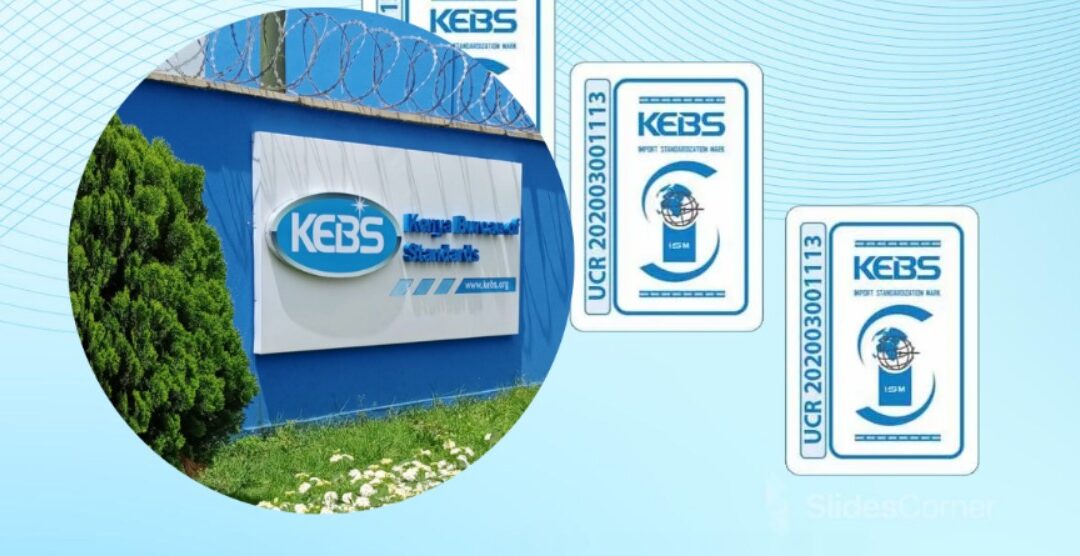
In Kenya, the KEBS Standardization Mark (S-Mark) stands out as one of the strongest assurances of product quality and safety.
The Kenya Bureau of Standards (KEBS) developed this mark to help consumers distinguish genuine and compliant goods from unsafe alternatives. For businesses, it is a badge of credibility. For consumers, it is a seal of trust.
This article explains the S-Mark in simple, clear language. You will understand what it means, how companies obtain it, why it matters, and how it influences buying decisions across the country.
What Is the KEBS Standardization Mark (S-Mark)?
The S-Mark is a mandatory quality certification mark placed on locally manufactured products that meet the requirements of the relevant Kenya Standards (KS). It confirms that the product has been:
-
Tested in accredited laboratories
-
Verified for safety and quality
-
Manufactured in facilities that follow Good Manufacturing Practices (GMP)
-
Audited and approved by KEBS inspectors
You will find the S-Mark on products such as:
-
Packaged foods and drinks
-
Household electrical devices
-
Cosmetics and toiletries
-
Building and construction materials
-
Agricultural inputs and related goods
S-Mark vs Diamond Mark vs Import Standardization Mark (ISM)
Different KEBS marks serve different purposes. Understanding each helps manufacturers choose the right certification path.
| Mark |
Type of Product |
Certification Purpose |
| S-Mark |
Locally manufactured goods |
Mandatory for most products |
| Diamond Mark (D-Mark) |
High-quality local/export products |
Voluntary premium certification |
| Import Standardization Mark (ISM) |
Imported goods |
Mandatory under the PVOC program |
The S-Mark acts as the baseline guarantee for quality and compliance for goods produced within Kenya.
Why Certification Marks Like the S-Mark Matter
1. They Build Consumer Confidence
Shoppers want products that are safe, reliable, and consistent. The S-Mark assures them that the item has passed verified quality and safety checks.
2. They Support Legal Compliance
Under the Standards Act (Cap 496), eligible products must display the S-Mark before entering the market. Businesses that fail to comply risk:
3. They Improve Market Access
Many supermarkets, government agencies, distributors, and export bodies require the S-Mark as part of supplier qualification.
4. They Reduce Product Liability Risks
Certified products are less likely to cause harm, helping businesses avoid legal claims and losses from poor-quality goods.
How Businesses Obtain the KEBS S-Mark
The certification process is structured and transparent. Below are the key steps.
Step 1: Identify the Applicable Kenya Standard
Manufacturers begin by finding the correct standard that governs their product. KEBS’s standards catalog provides all relevant KS and EAS standards.
Step 2: Submit an Online Application
The manufacturer submits an application through the KEBS portal and uploads:
Step 3: Product Testing
KEBS or accredited laboratories test samples to confirm compliance with chemical, physical, microbial, and labeling requirements.
Step 4: Factory Audit
KEBS inspectors visit the production facility to review:
-
Equipment and calibration records
-
Hygiene and sanitation practices
-
Staff competence
-
Quality control documentation
The audit ensures that the manufacturer can consistently produce safe and compliant products.
Step 5: Approval and Issuance of the S-Mark Permit
Once both the product and facility pass all requirements:
-
KEBS issues a one-year S-Mark Permit
-
The manufacturer receives a unique S-Mark code
-
The S-Mark can now be printed on product packaging
KEBS also performs periodic surveillance audits to ensure ongoing compliance.
How Consumers Can Verify a Genuine S-Mark
Fake certification marks exist in the market. Consumers can confirm authenticity by:
-
Checking that the S-Mark includes a valid permit number
-
Confirming clear manufacturer details on the label
-
Using the KEBS SMS verification service
SMS Verification
Text the permit number to 20023 to instantly confirm authenticity.
KEBS Toll-Free Number: 1545
How the S-Mark Shapes Consumer Buying Behavior
Certification marks influence how customers choose products. Studies show that buyers are more likely to:
-
Pay a premium for certified goods
-
Trust unfamiliar brands when certification is visible
-
Stay loyal to brands that maintain quality consistency
In Kenya especially, more consumers check for the S-Mark when buying electronics, baby food, cosmetics, fertilizers, and packaged foods.
Challenges Businesses Face in Maintaining S-Mark Compliance
Manufacturers often experience difficulties such as:
-
Product inconsistency leading to failed audits
-
Changes to Kenya Standards requiring adjustments
-
Labeling non-compliance (e.g., missing dates, wrong claims)
-
Failure to renew annual permits
To support manufacturers, KEBS offers:
Promoting Transparency and Trust in the Kenyan Market
The S-Mark is more than a regulatory requirement. It supports consumer protection, strengthens public health, and builds a trustworthy marketplace. The mark also encourages professionalism among manufacturers and prepares them for regional and international trade.
By improving product standards, the S-Mark raises confidence in Made-in-Kenya goods worldwide.
Make the S-Mark a Core Part of Your Brand Promise
For manufacturers, the S-Mark signals quality, safety, and reliability. For consumers, it offers peace of mind in an unpredictable market.
Whether you are a startup or an established enterprise, obtaining and maintaining the S-Mark is a key investment in your brand’s reputation and long-term growth.
Need Professional Help With KEBS Certification?
If your business needs support navigating the certification process, Clarity Pharma Consultancy offers reliable guidance. Their team provides assistance in:
-
KEBS certification preparation
-
Product documentation
-
Label and packaging compliance
-
Quality system setup
-
Audit readiness and staff training
With expert help, you can avoid delays, reduce errors, and achieve certification much faster.
Get professional support that aligns with KEBS standards and boosts your product credibility.
FAQs

by Mr. Maroa Noa | Nov 28, 2025 | Legal Framework, Marketing, Operations, Strategy
Gazetted standards sit at the heart of Kenya’s quality and regulatory framework. They guide how products are manufactured, packaged, imported, and sold across the country.
When the government publishes a standard in the Kenya Gazette, it becomes legally enforceable. As a result, every business in Kenya must understand what these standards mean and how to comply.
This article explains how gazetted standards work, why they matter, and how businesses can navigate compliance with confidence.
Understanding Gazetted Standards in Kenya
Gazetted standards refer to official rules and specifications published by the Kenya Bureau of Standards (KEBS) through the Kenya Gazette.
KEBS develops these standards through research, stakeholder input, and international benchmarking. After review and approval, KEBS forwards the standard for gazettement, making it legally binding for all affected sectors.
Because publication happens in the Kenya Gazette, the standard gains national visibility and becomes enforceable under the Standards Act (Cap 496).
Why Gazetted Standards Matter for Businesses
Gazetted standards serve multiple purposes. First, they protect consumers by ensuring that products meet minimum safety, quality, and performance requirements. Additionally, they help businesses build trust with customers by showing commitment to quality.
They also promote fair competition. Companies that comply cannot be undercut by suppliers using substandard or unsafe practices.
Above all, gazetted standards help Kenyan products compete in regional and global markets by aligning with recognized benchmarks.
How Gazetted Standards Are Developed
Understanding the development process helps businesses appreciate the weight behind each standard.
1. Research and Technical Committee Reviews
KEBS begins with market research and technical committee input. Committees include manufacturers, consumer organizations, regulators, and industry experts.
2. Public Review Period
Draft standards are published for public comments, giving businesses the chance to propose changes before final approval.
3. Approval and Gazettement
Once approved, the standard appears in the Kenya Gazette. From that moment, enforcement begins.
This transparent process ensures fairness and allows businesses adequate preparation time.
Types of Gazetted Standards Affecting Businesses
Gazetted standards vary by sector, but most fall into common categories.
1. Product Standards
These define the composition, purity, performance, and safety of goods. For example, standards for bottled water, pharmaceuticals, cosmetics, building materials, and electrical appliances.
2. Process Standards
These cover manufacturing methods, hygiene practices, calibration, packaging, and storage conditions.
3. Labeling and Packaging Standards
These outline what information must appear on products, including ingredients, expiry dates, instructions, and safety warnings.
4. Testing and Certification Standards
Businesses must follow approved testing methods before placing products in the market.
What Compliance with Gazetted Standards Involves
Compliance is more than meeting quality requirements. It includes documentation, record-keeping, and continuous monitoring. Below are essential areas to consider.
1. Understanding Applicable Standards
A business must first identify all standards that apply to its sector. KEBS provides a searchable database of standards.
2. Implementing Quality Controls
Companies should adopt internal systems that align with gazetted requirements. This may involve revising production processes or upgrading equipment.
3. Staff Training and Awareness
Employees must know the standards that affect their department. Even simple errors can expose a business to penalties.
4. Regular Testing and Audits
Routine product testing ensures ongoing compliance. Many businesses also schedule internal quality audits.
5. Certification and Mark of Quality (KEBS Diamond Mark / Standardization Mark)
Most regulated products require KEBS certification before entering the market.
Benefits of Complying with Gazetted Standards
Compliance offers more than legal protection.
-
Improved product quality builds customer trust.
-
Reduced business risk lowers chances of product recalls and penalties.
-
Stronger market competitiveness helps products meet regional export requirements.
-
Better operational efficiency comes from standardized processes.
-
Enhanced reputation positions a company as reliable and compliant.
When a business adheres to standards, it strengthens its brand and protects its long-term sustainability.
Penalties for Non-Compliance
Failing to meet gazetted standards exposes businesses to serious consequences.
Penalties may include:
-
Product seizures
-
Fines
-
License suspension
-
Closure of premises
-
Legal action
KEBS routinely conducts market surveillance and factory inspections. Because enforcement is strict, businesses must remain vigilant.
How Kenyan Businesses Can Stay Compliant
Businesses can follow several practical steps.
1. Track New and Updated Standards
Regularly check the Kenya Gazette and KEBS website for new notices.
2. Join Industry Associations
Associations often notify members about upcoming changes before official publication.
3. Conduct Regular Internal Reviews
Internal audits help catch non-compliance early.
4. Work with Compliance Professionals
Consultants can help interpret standards, prepare documentation, and align operations with regulatory expectations.
Clarity Pharma Consultancy
Staying compliant with gazetted standards can feel overwhelming, especially when handling technical documents or regulatory updates. Clarity Pharma Consultancy helps businesses interpret standards, prepare for audits, and implement solid compliance systems.
For support with KEBS requirements, product quality assessments, or documentation preparation, you can engage Clarity Pharma Consultancy for professional guidance tailored to your business needs.
This ensures you remain compliant, confident, and competitive.
Gazetted standards play a central role in ensuring quality and safety in Kenya’s marketplace. When businesses understand these standards and follow them consistently, they reduce risks, increase trust, and position themselves for long-term growth.
As regulations continue to evolve, the best strategy is to stay informed, proactive, and committed to continuous improvement.
FAQs