
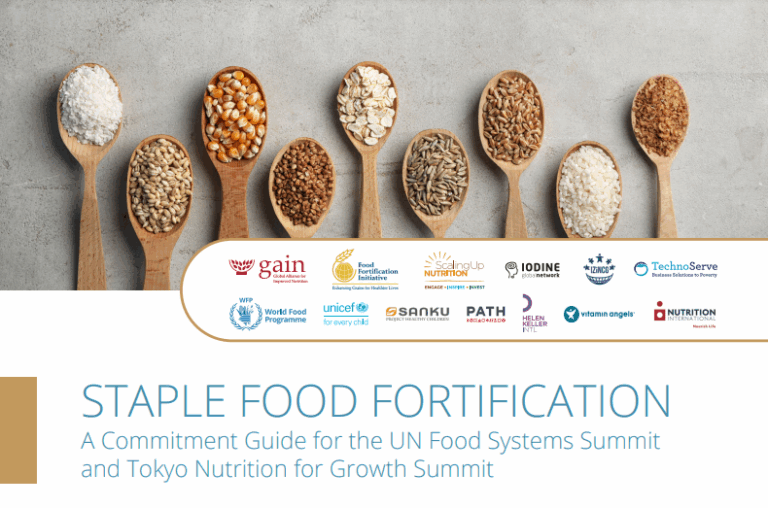
Millions of Kenyans rely on staple foods like maize flour, wheat flour, cooking oil and salt. Without micronutrients, these staples may leave critical nutrition gaps.
Fortunately, Kenya uses a Fortification Mark of Quality to ensure that common foods deliver essential vitamins and minerals.
This article explains how the fortification mark works, why it matters, and how consumers can use it to make healthier choices.
What Is Food Fortification — and Why It Matters
Food fortification involves intentionally adding vitamins and minerals to staple foods. The practice tries to correct or prevent nutrient deficiencies in populations.
Globally, many people — especially women, children and older adults — suffer from micronutrient deficiencies.
In Kenya, inadequate intake of iron, zinc, vitamin A, iodine and other micronutrients has historically contributed to malnutrition, stunted growth, weakened immune systems and impaired cognitive development.
By fortifying widely consumed staples, the government makes it easier for ordinary families to get essential nutrients — without changing their diet.
The Role of the Fortification Mark in Kenya
Kenya administers food fortification standards through the Kenya Bureau of Standards (KEBS). Products that meet the prescribed micronutrient levels qualify to carry the Fortification Mark of Quality.
The mark signals that a product — be it wheat flour, maize flour, salt or vegetable oil — contains the required vitamins and minerals (like iron, zinc, vitamin A, iodine) per national regulation.
This mark helps consumers quickly identify fortified foods on shelves. It also holds manufacturers accountable to maintain standards.
As a result, the fortification mark becomes a tool for public health — raising nutrient intake at population level, especially for vulnerable groups.
What Foods Must Carry the Fortification Mark
Under Kenya’s mandatory fortification policy, some staple food categories must be fortified and labelled. These include:
-
Wheat flour — fortified with vitamins/minerals (e.g. iron, zinc)
-
Dry-milled maize products — fortified for essential micronutrients
-
Salt — iodised to prevent iodine deficiency (although salt iodization preceded later fortification of staples)
-
Vegetable fats and oils — fortified with vitamin A
When you see the Fortification Mark on these products, you can trust that they comply with national fortification standards.
How the Fortification Mark Is Granted: The Certification Process
Manufacturers who wish to use the Fortification Mark must meet a set of requirements. The process involves several steps:
-
Standardization Mark first — The product must already carry a valid Standardization Mark (S-Mark) from KEBS. Without this, fortification certification cannot proceed.
-
Application via KEBS portal — The manufacturer applies to KEBS through the KIMS portal with relevant product and facility details.
-
Inspection and sample analysis — Quality assurance officers visit the production facility, draw samples, and analyze them to verify micronutrient levels in accredited labs.
-
Permit issuance — If samples meet the required standards and inspection reports are positive, KEBS grants the Fortification Mark permit under approval by its Standardization Committee.
-
Ongoing compliance monitoring — KEBS (together with Ministry of Health agencies) continues market surveillance to ensure fortified foods remain compliant.
This rigorous process helps maintain trust and ensures fortified foods provide real nutritional benefits.
Nutritional Impact: What Fortified Foods Can Do
Fortified staple foods have proven benefits. They supply essential micronutrients that may be lacking in regular diets. For example:
-
Fortification helps reduce iron and zinc deficiency — common in children and women.
-
It supports healthy growth, stronger immunity, and improved cognitive development.
-
Fortification reaches a wide population — even people with limited access to diverse diets.
Because staples like maize flour and oil form the bulk of many Kenyan diets, fortified products make a substantial difference in overall nutrient intake.
Challenges and Gaps: Why Fortification Mark Isn’t Enough by Itself
Despite progress, the system faces some challenges:
-
Low compliance in some products: A study found that only a fraction of maize flour samples in several counties met all fortification standards.
-
Quality control and enforcement gaps: Some millers — especially small or medium scale — struggle to maintain fortification standards consistently.
-
Uneven consumer awareness: Not all consumers know what the Fortification Mark means or why it matters. This limits demand for fortified foods.
-
Risk of “fortifying” poor-quality foods: Some processed or convenience foods may carry fortificants but still lack balanced nutrition — fortification alone doesn’t make unhealthy food healthy.
Therefore, fortification works best when combined with good dietary habits and proper regulation.
How Consumers Can Use the Fortification Mark Wisely
If you want to benefit from fortified foods, here are simple habits to adopt:
-
Always check for the Fortification Mark of Quality before buying wheat flour, maize flour, cooking oil or salt.
-
Prefer packaged staples with the mark over unpackaged or informal products.
-
Keep a balanced diet — complement fortified staples with fruits, vegetables, legumes and protein sources.
-
Be aware of food origin — imported products may not conform to Kenyan fortification legislation.
-
Encourage family members — especially children and pregnant or breastfeeding women — to use fortified staples.
These habits help improve nutrition at household and community levels.
The Bigger Picture: Fortification as a Public Health Strategy in Kenya
Kenya’s fortification program dates back decades, starting with salt iodization in the 1970s.
Over time, government agencies, food industry, and development partners formed alliances to set fortification standards, enforce them, and promote public awareness.
This coordinated approach aims to reach entire populations, reduce micronutrient deficiencies at scale, and improve overall health outcomes — especially in children, women and rural communities.
Take Action: For Food Producers and Consumers Alike
If you produce or distribute staple foods, ensure you abide by fortification and quality standards. Use the KEBS certification process to obtain the Fortification Mark legally and responsibly.
If you are a consumer or care for public health, choose fortified foods, and create awareness among your community. Every decision counts.
Clarity Pharma Consultancy supports food businesses and regulators in Kenya to comply with fortification standards, obtain necessary certifications, and ensure safe nutrient-rich products reach consumers. Contact us today for expert guidance on fortification compliance, quality assurance, and nutritional audits.
The Fortification Mark serves as a beacon of quality and nutrition for Kenya’s staple foods. When properly regulated and used, it can reach millions of households and improve health outcomes across the nation. Consumers, producers, and regulators all have a role to play.
By choosing fortified staples, demanding compliance, and spreading awareness, you help safeguard the nutritional future of Kenya.