
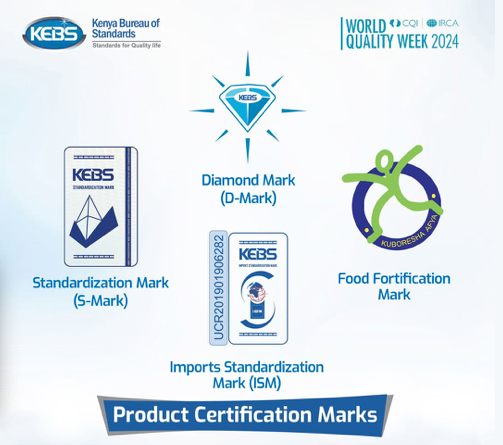
Certification marks have become an essential tool in Kenya for promoting product quality, safety, and consumer confidence. Unlike trademarks, which distinguish the origin of a product, certification marks indicate that a product meets specific standards. They serve as a seal of trust between manufacturers and consumers while supporting economic growth and industry competitiveness.
By understanding how certification marks function and their impact on both business and consumers, Kenyan manufacturers can better leverage these tools for market success.
What Are Certification Marks?
A certification mark is a type of intellectual property that signals compliance with established quality or safety standards. These marks are granted by authorized institutions after products, processes, or services undergo rigorous testing.
In Kenya, the Kenya Bureau of Standards (KEBS) plays a central role in issuing certification marks. Firms that meet KEBS or other approved standards receive this recognition, which reassures consumers about the quality, reliability, and safety of the product.
For a broader understanding of Kenya’s IP framework, you can explore Kenya’s Property Framework Guide.
The Role of Certification Marks in the Economy
Certification marks provide multiple benefits to the Kenyan economy and the manufacturing sector.
1. Enhancing Consumer Trust
Certification marks communicate quality and safety assurance. Consumers are more likely to choose products carrying recognized marks, knowing they meet established standards. This trust boosts brand loyalty and repeat purchases.
2. Supporting Market Competitiveness
Firms with certification marks can differentiate their products in crowded markets. By demonstrating compliance, manufacturers gain a competitive advantage locally and internationally, particularly in export markets.
3. Encouraging Industry Standards
Certification marks promote uniform standards across industries. Companies strive to maintain quality benchmarks, leading to overall improvement in production processes, product durability, and service delivery.
For insight into how IP promotes commercial value, see How to Boost Commercial Value from Intellectual Property.
Key Institutions in Certification Marks
Several organizations manage certification marks in Kenya:
-
Kenya Bureau of Standards (KEBS): KEBS certifies products and ensures adherence to national and international standards.
-
Kenya Industrial Property Institute (KIPI): KIPI oversees intellectual property rights, including certification marks, and protects the interests of innovators.
-
Private Certification Bodies: Certain industry-specific bodies issue marks that align with global quality standards, such as ISO 9001 certification for quality management.
By collaborating with these institutions, manufacturers can ensure their products meet recognized benchmarks and gain market credibility.
Economic and Consumer Benefits
1. Promoting Export Readiness
Products with certification marks are more attractive in international markets. Exporters demonstrate compliance with global standards, increasing their ability to compete and secure foreign contracts.
2. Reducing Counterfeiting and Imitation
Certification marks help curb counterfeit products. When consumers recognize a trusted mark, they are less likely to purchase substandard or fake products. For a deeper understanding of counterfeiting protection, read The Role of KIPI in Combating Counterfeiting.
3. Encouraging Continuous Improvement
Certification motivates manufacturers to invest in quality management systems, staff training, and R&D. Over time, this improves operational efficiency, product reliability, and customer satisfaction.
Challenges Facing Certification Marks in Kenya
Despite their benefits, certification marks face some hurdles:
-
Limited Awareness: Many SMEs do not fully understand the benefits or application process for certification marks.
-
Cost of Compliance: Testing and certification can be expensive, especially for small businesses.
-
Enforcement Gaps: Without strict monitoring, some firms may misuse marks, undermining trust.
Addressing these challenges requires targeted education, financial incentives, and stronger regulatory enforcement.
Strategic Approaches to Maximising Certification Mark Benefits
Manufacturers can adopt several strategies to leverage certification marks effectively:
-
Educate Stakeholders: Train employees and management about the benefits and requirements of certification marks.
-
Integrate Quality into Business Strategy: Align quality standards with production processes to consistently meet certification criteria.
-
Collaborate with Regulatory Bodies: Engage KEBS, KIPI, and industry associations to stay updated on compliance and standards.
-
Promote Marks to Consumers: Use marketing and branding strategies to highlight certified products, enhancing trust and sales.
These approaches ensure that certification marks are not just regulatory obligations but tools for competitive advantage.
Certification marks in Kenya strengthen consumer confidence, support manufacturing growth, and promote industrial competitiveness. By providing a clear signal of quality and compliance, they help businesses differentiate themselves in the market, gain export opportunities, and reduce the impact of counterfeit goods.
A strategic approach — combining awareness, enforcement, and quality-driven business practices — allows manufacturers to maximize the economic and reputational benefits of certification marks.
Learn more about boosting quality, IP, and consumer trust through Clarity Pharma Consultancy’s insights:
FAQs